The golden grain: how coffee built Costa Rica (and the myth everyone repeats)
In 1843 an English captain carried 5,505 hundredweight of coffee out of Puntarenas bound for Liverpool. That voyage changed the country more than any war. But the most repeated story about Costa Rican coffee — the one about the National Theatre — turns out to be false, and the documents say so plainly.
Costa Rica had no gold, no silver, and no indigenous empire to plunder. For three hundred years it was the poorest and most forgotten colony in Central America — so poor that seventeenth-century chronicles describe governors growing their own food because there was nothing to pay them with.
Everything the country is today comes from a plant that arrived from the Antilles around 1776.
The timeline almost nobody knows
| Year | What happened |
|---|---|
| 1776 | The first coffee seeds arrive from the Antilles |
| 1816 | Father Félix Velarde's will documents the first known coffee plot |
| 1820 | First export: one hundredweight leaves Puntarenas for Panama aboard the Nuestra Señora |
| 1830 | The first printing press arrives, paid for with coffee money |
| 1831 | The State grants title to unclaimed land to whoever plants it with coffee |
| 1832 | German merchant Jorge Stiepel ships coffee to Chile; from there it reaches London as "Chilean from Valparaíso" |
| 1836 | The country issues its own currency for the first time |
| 1840 | More than 14,000 ox carts move 440,000 hundredweight a year |
| 1843 | Captain William Le Lacheur carries 5,505 hundredweight to England aboard the Monarch |
| 1843 | The first university is founded |
| 1845 | The first formal hospital opens |
| 1871 | Construction begins on the Atlantic railway |
Look at the pattern: printing press, currency, university, hospital, railway. Coffee was not just another business. It was what paid for the construction of the Costa Rican state. All within a single human lifetime.
1831: the decision that changed everything
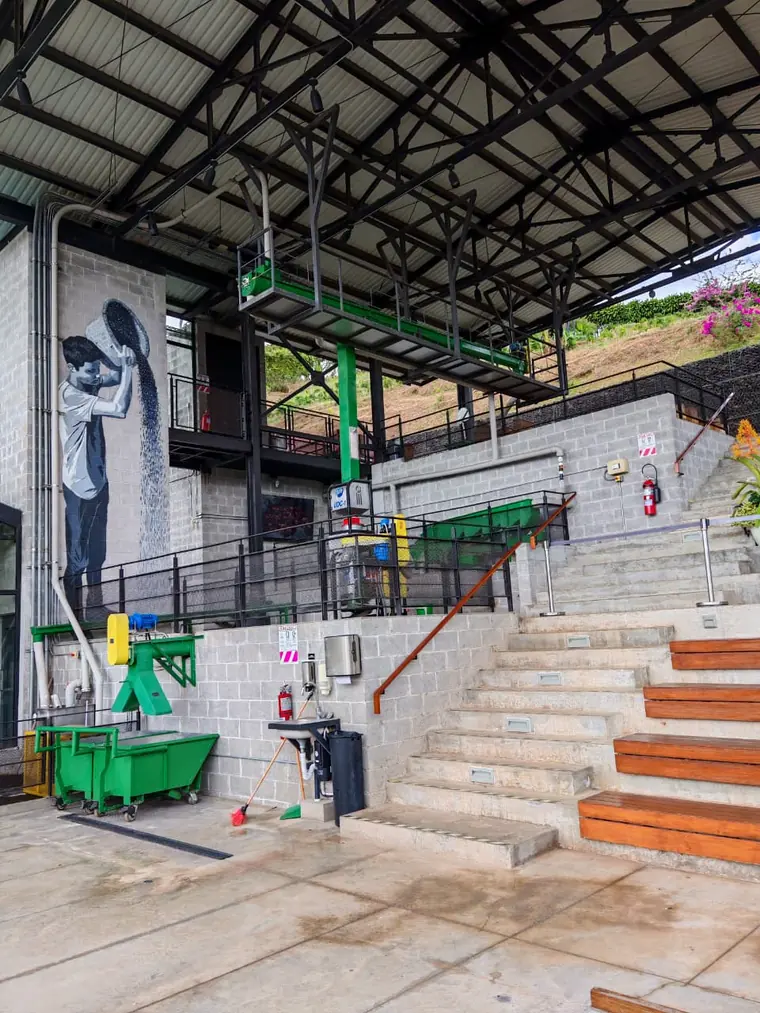
This is the year that matters most and gets mentioned least. In 1831 the State decided to grant ownership of unclaimed land to anyone who planted it with coffee. It did not sell it to a handful of families: it titled it to whoever worked it.
The consequence was a structure of many small and medium growers across the Central Valley, instead of the large plantations with enslaved labor that defined Guatemala, El Salvador or the sugar Caribbean.
That difference explains a good part of why Costa Rica turned out otherwise. It was not moral virtue or exceptionalism: it was a land-policy decision taken in 1831, and a geography that did not allow vast estates in a narrow valley between mountains.
Where "golden grain" comes from
The nickname is not poetic. For much of the nineteenth century coffee was literally the country's source of gold: the only commodity bringing in European currency. When the international coffee price fell, all of Costa Rica tightened its belt.
The captain who took the risk
William Le Lacheur was a Channel Islands captain heading back to England with a half-empty hold. In 1843 he put in at Puntarenas, saw coffee stacked up with no direct buyer, and proposed something that sounds reckless today: take it without paying, sell it in London, and come back with the money.
The growers handed 5,505 hundredweight to a stranger, on credit and without guarantee, for a voyage of months around Cape Horn.
Le Lacheur came back. And he paid. That opened the direct route to England, without Chilean middlemen, and Costa Rican coffee stopped being sold under somebody else's name.
The National Theatre myth
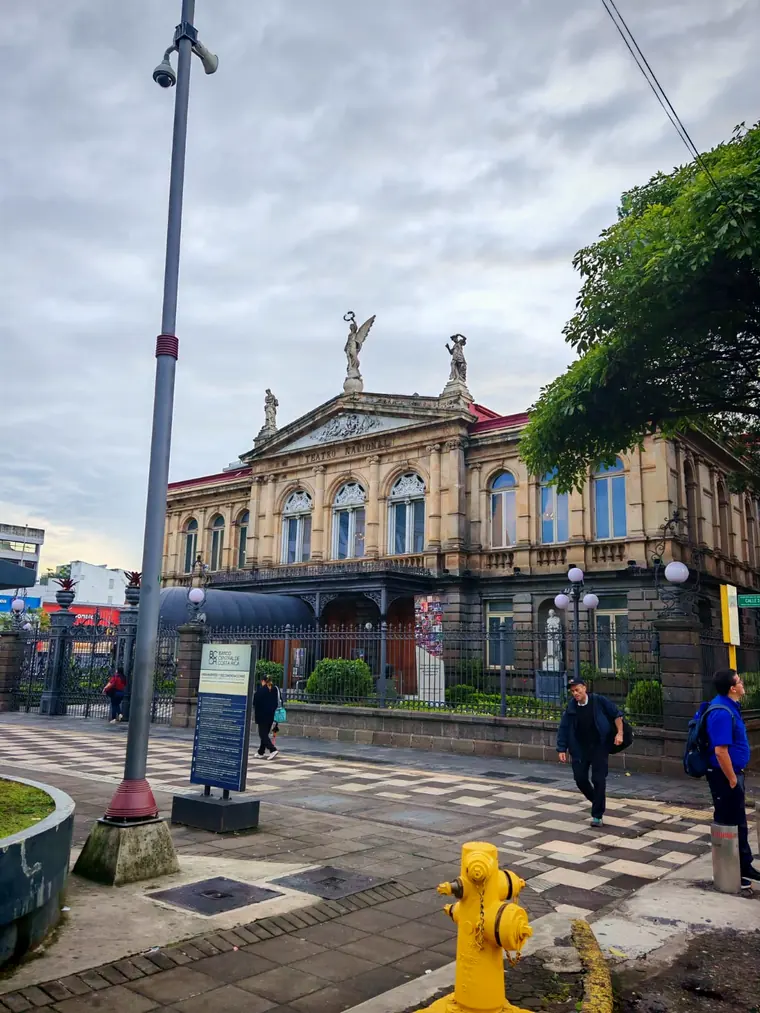
Here comes the part almost every guide gets wrong, and it is worth stating precisely.
The popular version says the coffee barons, offended that soprano Adelina Patti would not sing in Costa Rica for want of a decent theater, taxed themselves on coffee and built the National Theatre with it. It is a perfect story. And it is false in both halves.
What the documents say:
- The coffee tax existed, but briefly. It was set in 1890 on coffee exports and in 1893 it was replaced by a general tax on imports, paid by the whole population through consumption.
- The coffee sector's contribution was minor: around 120,000 pesos, against a total cost of between 1,100,000 and 1,200,000 pesos. Roughly 10%.
- More than 90% was paid by the Costa Rican population through that general consumption tax.
- The Adelina Patti story has no backing. Historians call it a facile explanation for a far more complex political and cultural process.
- It was built by some 400 Costa Rican craftsmen — carpenters, masons, ironworkers, painters.
- It opened on 19 October 1897, not the 21st as was celebrated for decades, with Gounod's Faust.
To be clear: coffee did finance the country. But the National Theatre, the symbol always attributed to it, was paid for by the whole population buying imported goods, and raised by local workers. It is a less elegant story and a considerably more honest one.
From the driver's seat
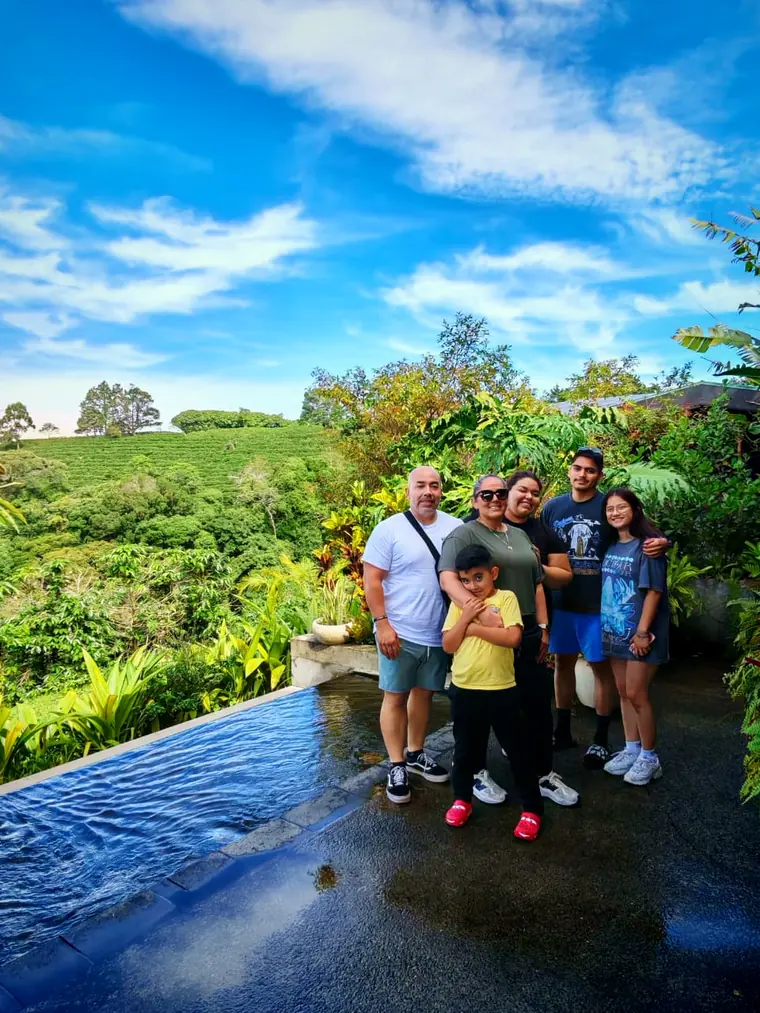
If you are going from San José towards the Pacific or climbing to Monteverde, you will cross coffee farms without noticing. They are easy to spot: rows of low dark shrubs under taller shade trees, almost always on a slope, between 800 and 1,600 meters.
November to February is harvest, and you will see picking crews with baskets tied at the waist. That is the best time to stop at a farm: there is real work going on, not a demonstration staged for visitors.
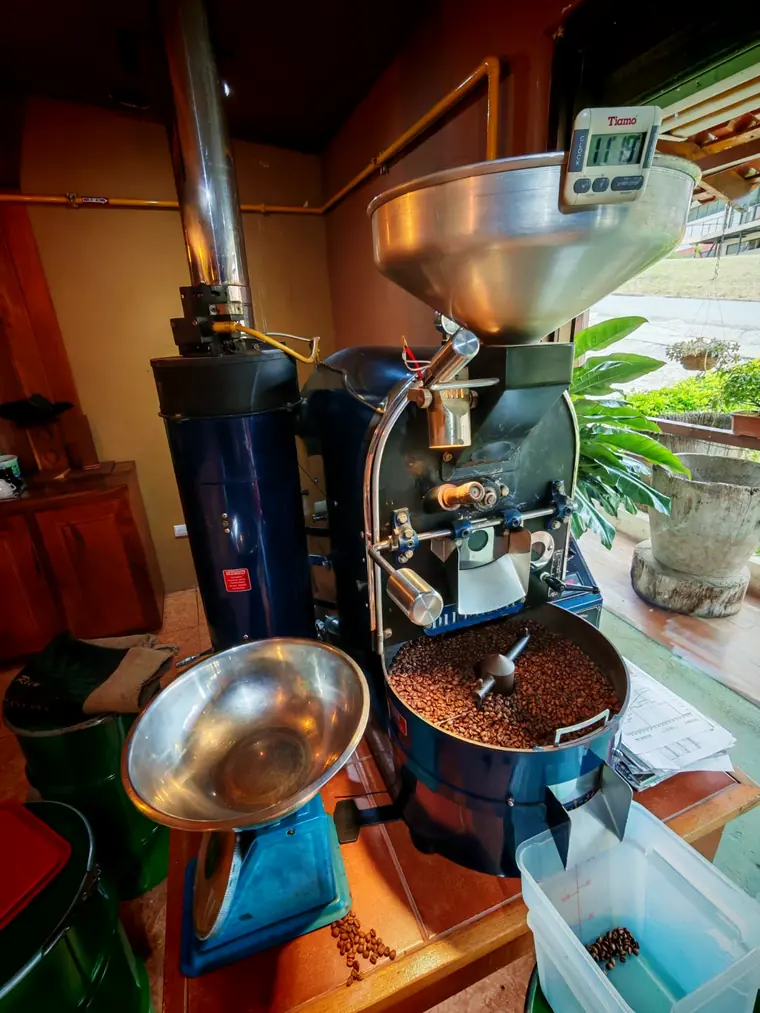
We stop where the coffee is actually produced, not at the roadside souvenir shop. A quick coffee on the way can be added with Tropical Experts VIP. But walking a farm properly — seeing the mill, the drying patios, tasting — needs one to two hours: that is what Tropical Experts VIP is for, and you add it when you price the trip.
What is left of all this
Costa Rica no longer lives on coffee — services, medical devices and tourism weigh more today. But the country you are about to travel through was built with that money: the Central Valley roads follow the tracks the ox carts opened, the Atlantic railway was built to move sacks, and the coffee towns are the ones with the large churches.
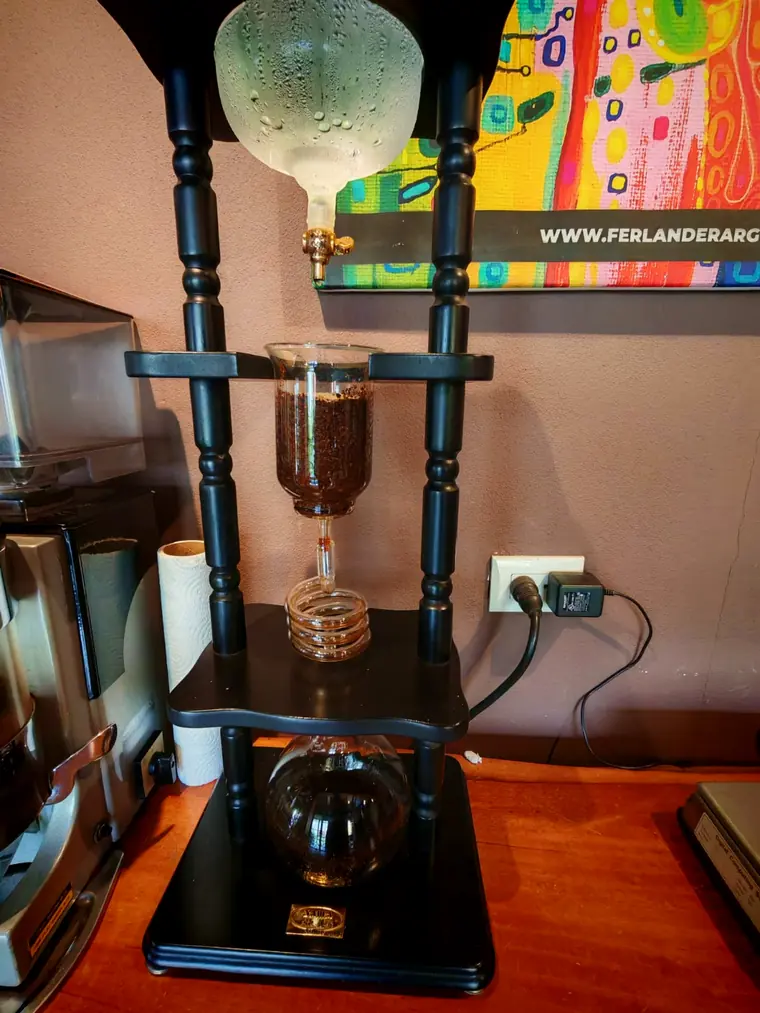
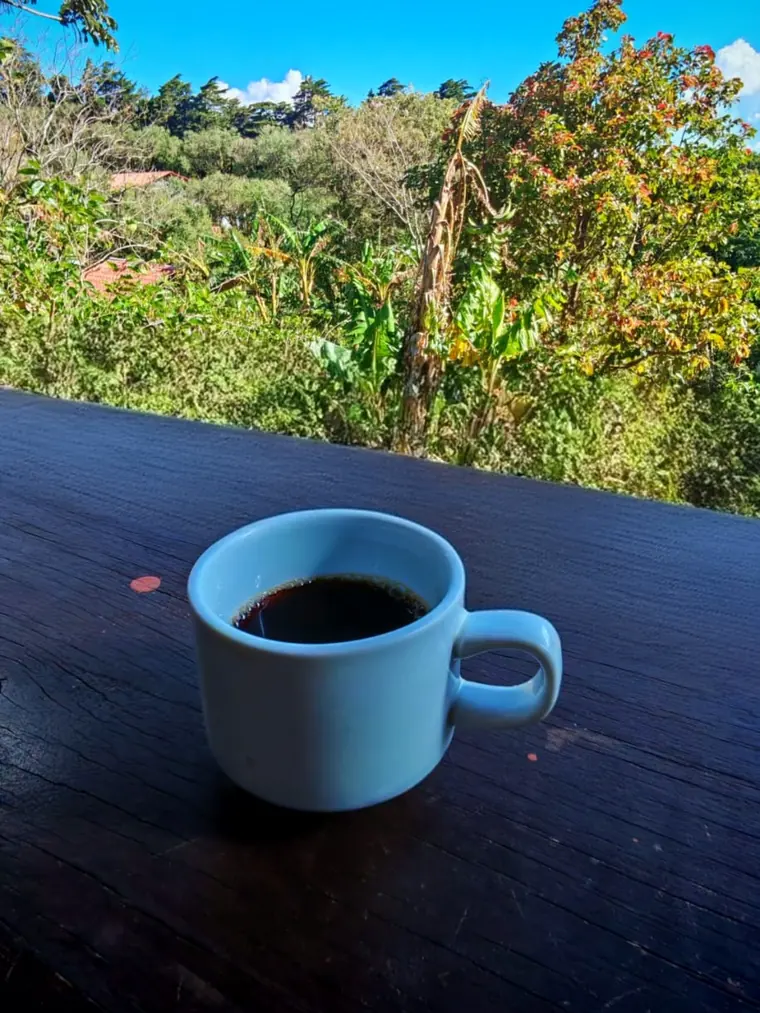
When you order a coffee in a soda and it arrives from a chorreador — that cloth bag hanging from a wooden stand — you are drinking by the method used here before any machine existed. It is not tourist nostalgia: it is how half the households in the country still brew.
The short version
Coffee arrived around 1776 and by 1843 was shipping directly to England. It paid for the printing press, the currency, the university, the hospital and the railway. The 1831 decision to grant land title to whoever planted it created a structure of small growers that shaped the country. And no, coffee did not pay for the National Theatre: the whole population did, through a tax on imports.
Sources
You will drive through the coffee country
The route to the Pacific and the climb to Monteverde cross the heart of it. Add the Tropical Experts VIP service when you price the trip and the driver arranges the stop.