La carreta pintada de Sarchí: el camión de carga que se volvió obra de arte
La carreta costarricense empezó siendo lo más parecido que había a un camión: la máquina que sacaba el café a puerto por caminos imposibles. Cómo esa herramienta terminó pintada como un caleidoscopio, por qué cada carreta «cantaba» con voz propia y qué se ve hoy en Sarchí, el pueblo que las sigue haciendo a mano.
En el artículo del café contamos cómo el grano de oro construyó este país. Lo que no contamos fue en qué viajaba ese café. La respuesta es el objeto que usted va a ver pintado en rótulos, murales, camisetas y hasta en el pasaporte: la carreta. Y su historia es la de una herramienta de trabajo que se ganó, a puro camino, el derecho a ser arte.
Primero fue un camión
A mediados del siglo XIX, el café se cultivaba en el Valle Central y se vendía en Europa. El problema medía cien kilómetros: entre el cafetal y el puerto de Puntarenas había montañas, ríos y un barro que se tragaba cualquier rueda convencional. El viaje de ida y vuelta tomaba alrededor de dos semanas, en caravanas de carretas haladas por bueyes.
Para ese barro los artesanos ticos perfeccionaron una rueda que es pura ingeniería vernácula: un disco macizo, sin rayos — mezcla del disco indígena con el aro con radios español. La rueda maciza no se atascaba con el lodo entre los rayos: lo cortaba como cuchilla. Sobre esa rueda se movió la economía entera del país durante décadas: el café que pagó el teatro, la imprenta y la universidad viajó en carreta.
Después se volvió un apellido
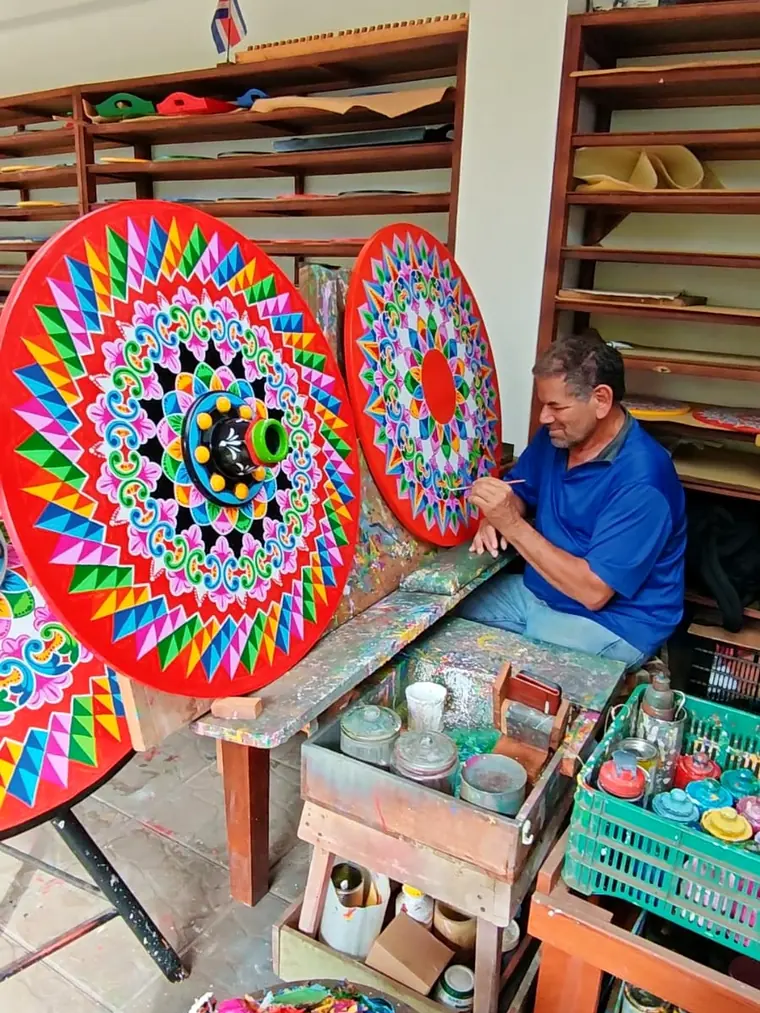
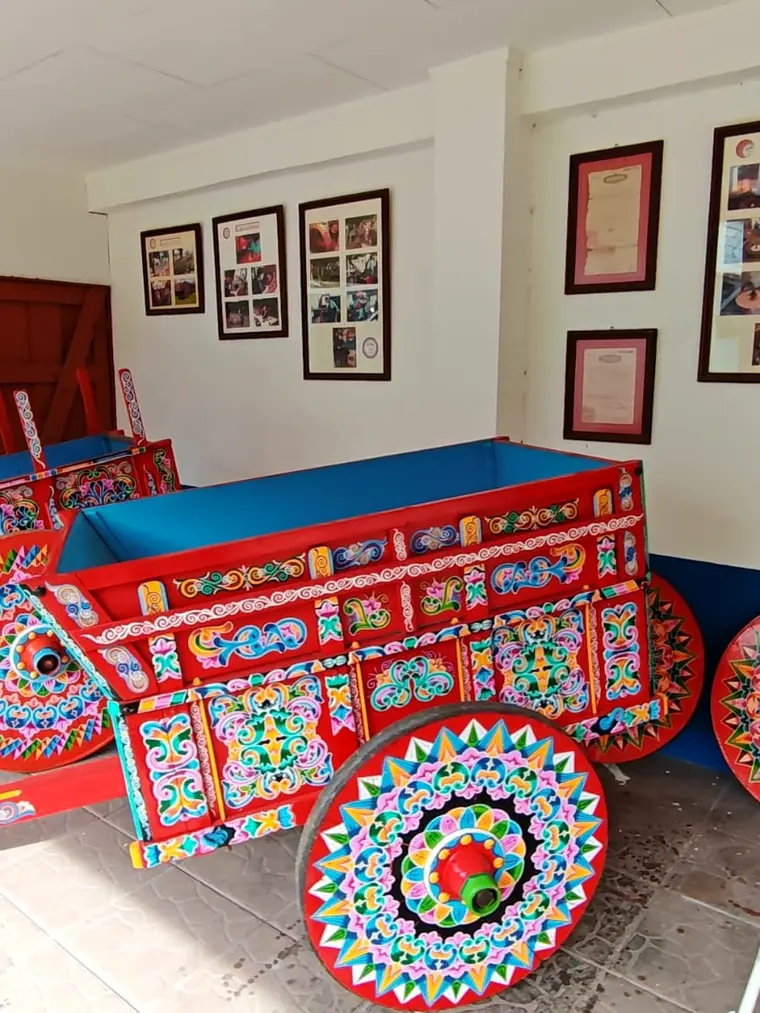
A principios del siglo XX pasó algo que nadie planificó: los boyeros empezaron a pintar las carretas. Primero colores simples por región — y aquí el dato que nos encanta: la decoración funcionaba como matrícula. Un entendido miraba el diseño y sabía de qué pueblo venía esa carreta, como hoy se reconoce una placa. Con los años los diseños se volvieron mandalas: estrellas, flores, plumas y filigranas en colores encendidos, con Sarchí a la cabeza del estilo.
Y estaba el sonido. Cada carreta, por la manera en que el aro metálico casaba con la madera de la rueda, producía al andar un «canto» propio — un chirrido afinado que el boyero cuidaba con orgullo, porque desde lejos, de noche, se sabía quién venía por el camino sin verlo. Una máquina de carga con matrícula pintada a mano y timbre musical propio: eso es la carreta tica.
El reconocimiento
El país lo formalizó por etapas: la carreta fue declarada símbolo nacional del trabajo en 1988, y en 2005 la UNESCO proclamó la tradición del boyeo y la carreta patrimonio cultural inmaterial de la humanidad — el primer reconocimiento de ese rango para Costa Rica. Cada segundo domingo de marzo, en San Antonio de Escazú, el Día del Boyero junta cientos de carretas y yuntas engalanadas en un desfile que huele a café y suena a cimarrona.
Sarchí, el pueblo taller
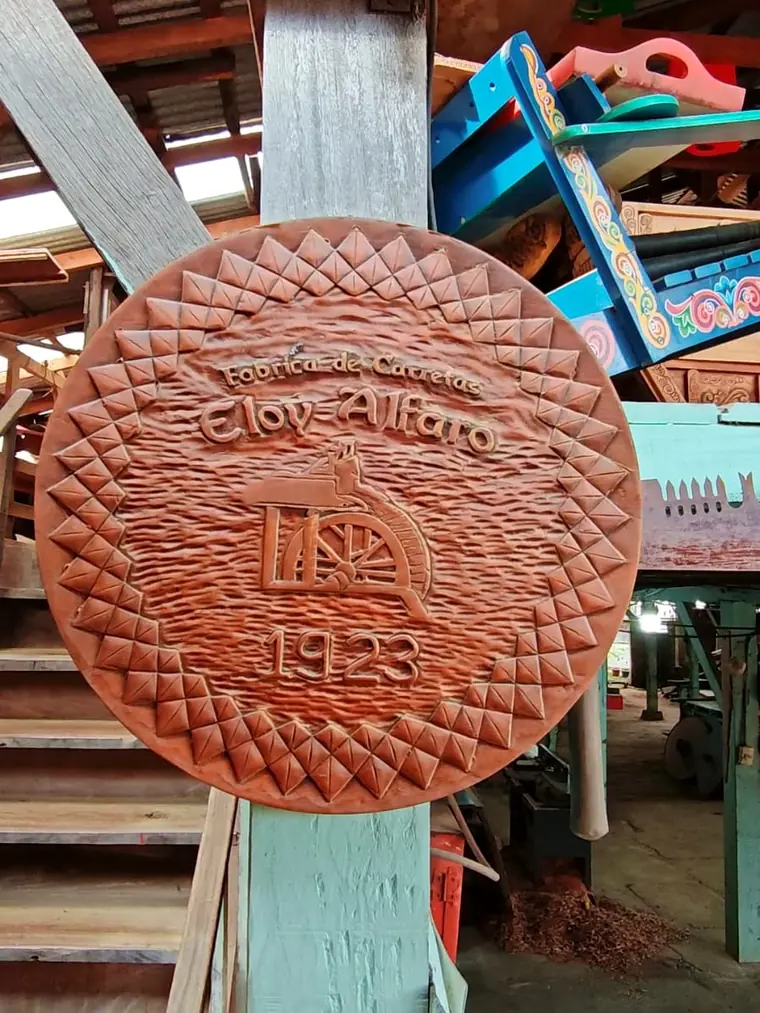
Sarchí, en las faldas cafetaleras de Alajuela, es la capital indiscutida de este arte. Ahí sigue trabajando la fábrica de carretas más antigua del país —con maquinaria movida por una rueda hidráulica desde los años veinte—, ahí se pintan a pincel las ruedas que van a dar a todo el mundo, y ahí está, en el parque central, la carreta más grande del mundo: dos pisos de alto, pintada completa, certificada por Guinness.
Lo que más vale la pena, eso sí, no es la carreta gigante: es pararse diez minutos a ver a un pintor hacer un mandala a pulso, sin plantilla, con el pincel cargado de un solo color por pasada. Ahí se entiende que esto no es recuerdo de tienda: es un oficio vivo con siglo y medio de linaje.
Del asiento del conductor
Sarchí queda a paso de la ruta que usamos de San José a La Fortuna por Naranjo, y es nuestra parada favorita para ese tramo: baño, café, veinte minutos de taller y seguimos. Mejor temprano, cuando los pintores están trabajando.
Si le gusta un recuerdo con historia, la miniatura de carreta pintada a mano es de lo poco que se compra aquí que de verdad se hizo aquí. Pregunte por las que salen del taller mismo — se nota la diferencia en el pulso del pincel.
Lo esencial
La carreta fue el camión del café: dos semanas de barro hasta Puntarenas sobre una rueda maciza que cortaba el lodo. La pintura empezó como matrícula de pueblo y terminó en mandalas; cada carreta «cantaba» con voz propia. Símbolo nacional del trabajo desde 1988, patrimonio de la humanidad por la UNESCO desde 2005, y en Sarchí se sigue haciendo a mano.
Fuentes consultadas
The painted oxcart of Sarchí: the cargo truck that became a work of art
The Costa Rican oxcart began as the closest thing the country had to a truck: the machine that hauled coffee to port over impossible roads. How that tool ended up painted like a kaleidoscope, why every cart «sang» with its own voice, and what you can see today in Sarchí, the town that still builds them by hand.
In our coffee article we told how the golden bean built this country. What we did not tell was what that coffee travelled in. The answer is the object you will see on signs, murals, T-shirts and even the passport: the oxcart. And its story is that of a working tool that earned, mile by muddy mile, the right to be art.
First, it was a truck
In the mid-nineteenth century, coffee was grown in the Central Valley and sold in Europe. The problem was a hundred kilometres long: between the farms and the port of Puntarenas lay mountains, rivers and a mud that swallowed any conventional wheel. The round trip took about two weeks, in caravans of ox-drawn carts.
For that mud, Costa Rican craftsmen perfected a wheel that is pure vernacular engineering: a solid disc, without spokes — a hybrid of the indigenous disc and the spoked Spanish rim. The solid wheel could not clog with mud between spokes: it cut through it like a blade. On that wheel the country's entire economy moved for decades: the coffee that paid for the theatre, the printing press and the university travelled by oxcart.
Then it became a surname
In the early twentieth century something happened that nobody planned: the oxherds began painting their carts. First simple colours by region — and here is the detail we love: the decoration worked as a licence plate. A knowing eye could read the design and tell which town the cart came from, the way you read a number plate today. Over the years the designs grew into mandalas: stars, flowers, plumes and filigree in blazing colour, with Sarchí leading the style.
And there was the sound. Each cart, through the way its metal rim seated against the wooden wheel, produced its own «song» as it rolled — a tuned chirp its oxherd maintained with pride, because at night, from far down the road, you knew who was coming without seeing them. A cargo machine with a hand-painted licence plate and its own ringtone: that is the Costa Rican oxcart.
The recognition
The country made it official in stages: the oxcart was declared the national symbol of labour in 1988, and in 2005 UNESCO proclaimed the oxherding and oxcart tradition intangible cultural heritage of humanity — Costa Rica's first recognition at that rank. Every second Sunday of March, in San Antonio de Escazú, Oxherd Day gathers hundreds of decorated carts and ox teams in a parade that smells of coffee and sounds of brass bands.
Sarchí, the workshop town
Sarchí, on the coffee slopes of Alajuela, is the undisputed capital of this craft. The country's oldest oxcart factory still works there — its machinery driven by a waterwheel since the 1920s — the wheels bound for the whole world are still painted there by brush, and in the central park stands the largest oxcart in the world: two storeys tall, fully painted, Guinness-certified.
What is most worth your time, though, is not the giant cart: it is standing for ten minutes watching a painter draw a mandala freehand, no stencil, the brush loaded with a single colour per pass. That is when you understand this is not a souvenir-shop trinket: it is a living trade with a century and a half of lineage.
From the driver's seat
Sarchí sits right off the route we use from San José to La Fortuna via Naranjo, and it is our favourite stop on that stretch: restroom, coffee, twenty minutes of workshop, and onward. Better early, when the painters are at work.
If you like a souvenir with history, the hand-painted miniature oxcart is one of the few things sold here that was truly made here. Ask for the ones from the workshop itself — you can tell by the steadiness of the brushwork.
The short version
The oxcart was coffee's truck: two weeks of mud to Puntarenas on a solid wheel that sliced through the bog. The paint began as a town licence plate and grew into mandalas; every cart «sang» with its own voice. National symbol of labour since 1988, UNESCO heritage of humanity since 2005 — and in Sarchí they still make them by hand.
¿Le gustaría conocer Sarchí?
Would you like to see Sarchí?
Sarchí queda camino a La Fortuna por Naranjo: la parada perfecta para estirar las piernas, ver pintar una rueda en vivo y seguir viaje. Pídala al reservar — las paradas cortas van incluidas.
Sarchí sits on the way to La Fortuna via Naranjo: the perfect stop to stretch your legs, watch a wheel being painted live, and drive on. Ask for it when you book — short stops are included.