Caribe Sur: el otro país que cabe dentro de Costa Rica
Costa Rica tiene dos mares y mucha gente solo conoce uno. El que cruza el país entero hasta Puerto Viejo de Talamanca encuentra otra cosa: cultura afrocaribeña con idioma propio, playas de arena negra junto a playas de arena dorada, un arrecife de coral y —esto sorprende a todos— el mejor clima del país en setiembre y octubre, cuando el Pacífico está pasado por agua.
Hay una frase que usamos con los clientes cuando pasamos el cruce de Siquirres y el aire empieza a oler distinto: bienvenidos al otro país. No es exageración. El Caribe Sur tiene otra música, otra comida, otro idioma en las sodas —el inglés criollo limonense— y otro calendario de lluvias. Lo único que comparte con el Pacífico es el pasaporte.
La llegada es parte del viaje
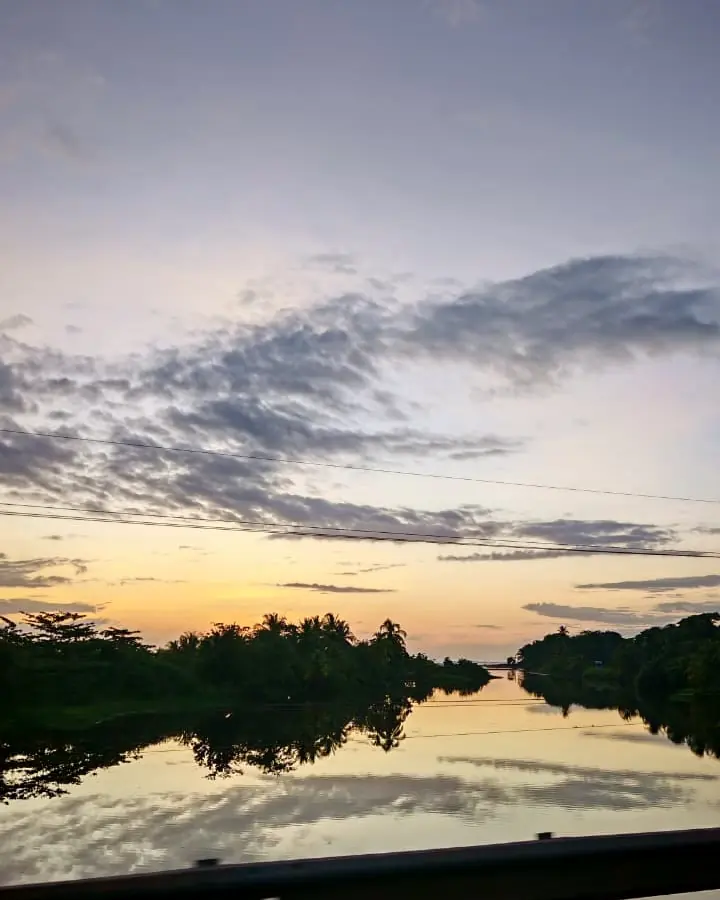
De San José son cuatro horas y media por la ruta 32, sin atajos posibles: se baja por el parque Braulio Carrillo —una pared de selva a ambos lados— y después la carretera corre plana entre bananales, ríos y canales hasta Limón, y de ahí por la costa hasta Puerto Viejo.
Playa Negra: la arena que brilla
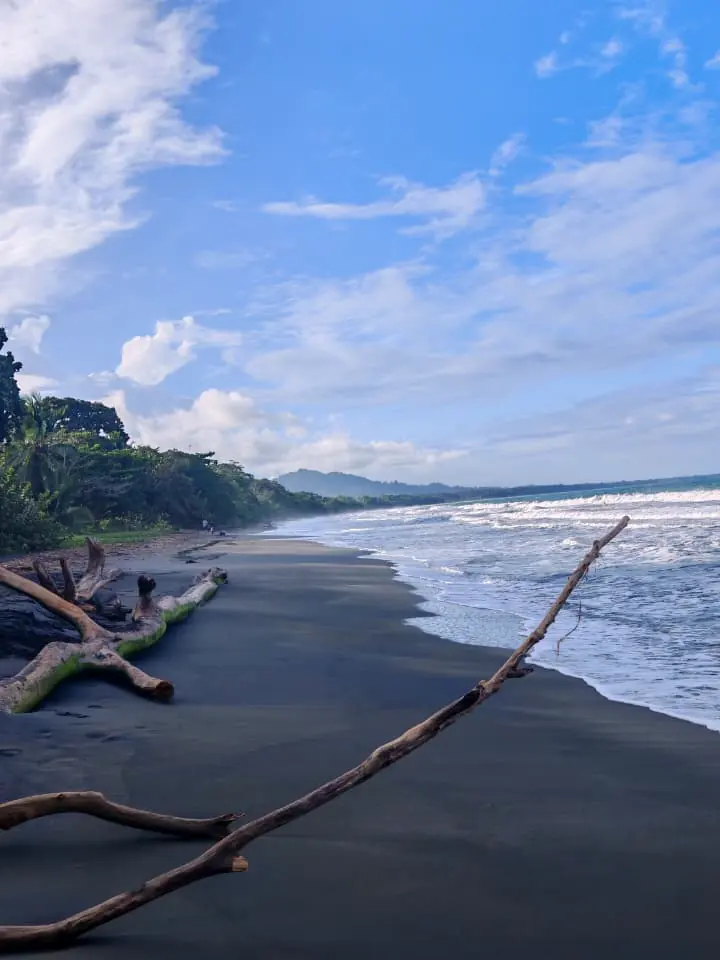
Lo primero que descoloca al que llega es la arena. La de Playa Negra, entre Cahuita y Puerto Viejo, es de un negro volcánico que con el sol de la mañana brilla como grafito mojado, con el mar verde esmeralda encima. No hay nada igual en el Pacífico.
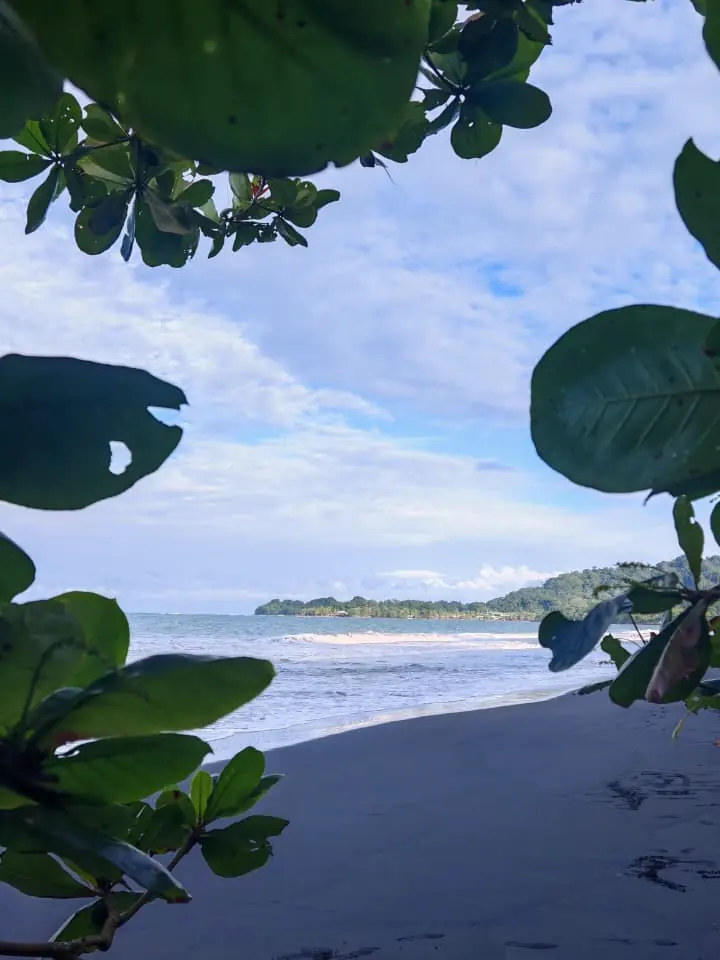
Y a diez minutos, el contraste: Playa Cocles, dorada y con la ola más constante de la zona, custodiada por su isla de bosque. Después vienen Chiquita, Punta Uva —la de nadar, mansa y de agua clara— y Manzanillo, donde la carretera se acaba y empieza el refugio Gandoca-Manzanillo. Cinco playas distintas en quince kilómetros.
Los perezosos no hay que buscarlos
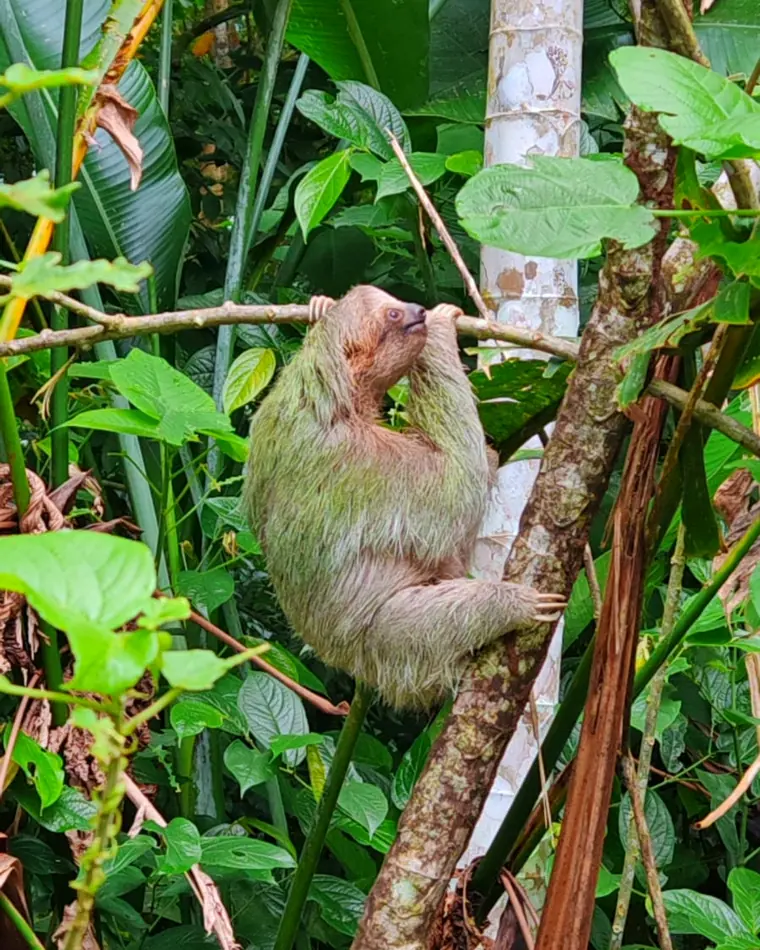
En el Caribe Sur el perezoso es vecino, no atracción. Se ven en los almendros de la orilla de la carretera, en los patios de los hoteles, cruzando el cable eléctrico como equilibristas lentísimos.
La comida es la mitad del viaje
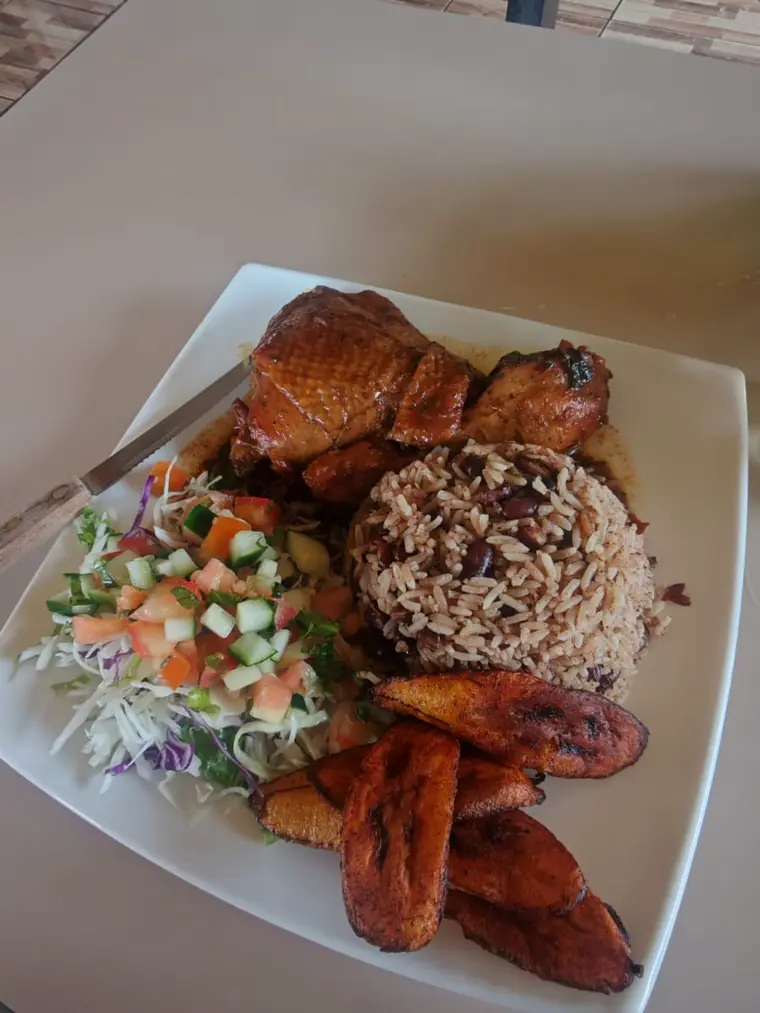
Aquí el gallo pinto se llama rice and beans y se cocina en leche de coco. El pescado viene en salsa caribeña con chile panameño, el patí —empanada especiada heredada de Jamaica— se compra en la panadería del pueblo, y el rondón, la sopa de mariscos y coco que se cocina «de lo que se encontró» (run down), hay que pedirlo con horas de anticipación en los restaurantes de familia. Si su idea del viaje incluye comer, este lado del país juega en otra liga.
Si llega en crucero
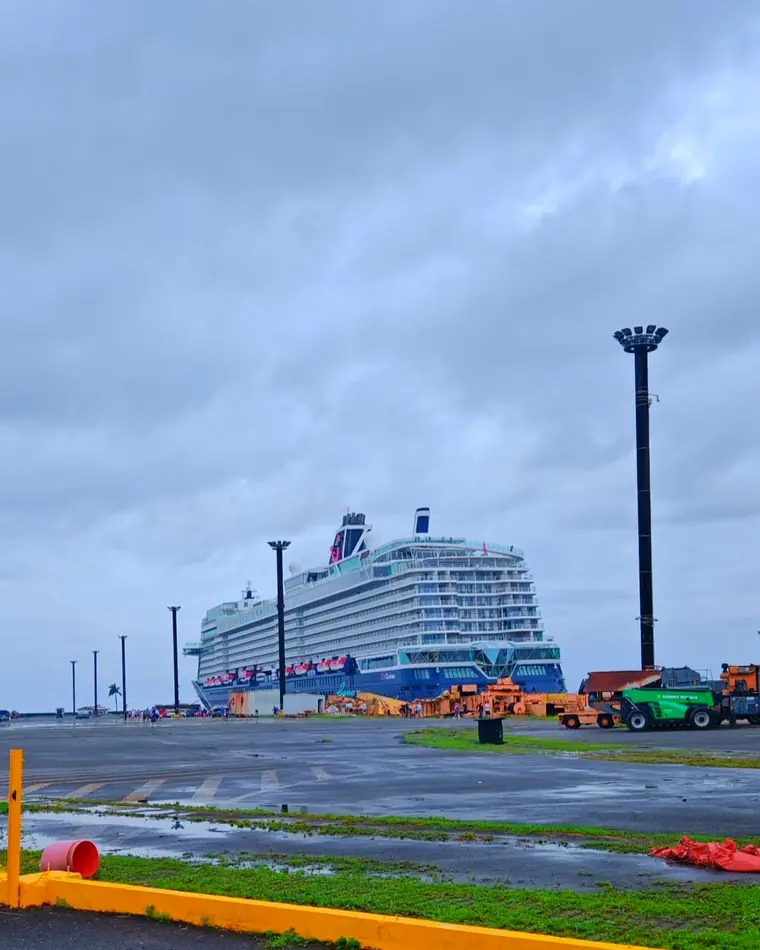
En temporada de cruceros, Limón recibe barcos casi a diario. Si el suyo atraca un día entero, alcanza perfectamente para bajar al Caribe Sur en privado y volver con margen — y es otra experiencia que quedarse en el puerto.
Lo esencial
Setiembre y octubre son los meses estrella del Caribe: cuando el Pacífico está mojado, aquí sale el sol. Son 4 h 30 desde San José sin atajos, cinco playas distintas en quince kilómetros, y la comida — el rice and beans, el patí, el rondón — vale el viaje por sí sola.
Fuentes consultadas
The South Caribbean: the other country that fits inside Costa Rica
Costa Rica has two seas and most visitors only meet one. Cross the whole country to Puerto Viejo de Talamanca and you find something else: Afro-Caribbean culture with its own language, black-sand beaches next to golden ones, a coral reef and — this surprises everyone — the country's best weather in September and October, when the Pacific is under water.
There is a line we use with our passengers when we pass the Siquirres junction and the air starts to smell different: welcome to the other country. It is not an exaggeration. The South Caribbean has different music, different food, a different language in the sodas — Limón Creole English — and a different rain calendar. The only thing it shares with the Pacific is the passport.
Getting there is part of the trip
From San José it is four and a half hours on Route 32, with no shortcuts available: you descend through Braulio Carrillo National Park — a wall of jungle on both sides — and then the road runs flat past banana plantations, rivers and canals to Limón, and down the coast to Puerto Viejo.
Playa Negra: the sand that shines
The first thing that throws new arrivals is the sand. At Playa Negra, between Cahuita and Puerto Viejo, it is a volcanic black that shines like wet graphite under the morning sun, with an emerald sea on top. There is nothing like it on the Pacific.
And ten minutes away, the contrast: Playa Cocles, golden, with the most consistent wave in the area, guarded by its forest island. Then come Chiquita, Punta Uva — the swimming one, gentle and clear — and Manzanillo, where the road ends and the Gandoca-Manzanillo refuge begins. Five different beaches in fifteen kilometres.
You do not look for sloths here
In the South Caribbean the sloth is a neighbour, not an attraction. You see them in the almond trees along the road, in hotel gardens, crossing the power lines like impossibly slow tightrope walkers.
The food is half the trip
Here gallo pinto is called rice and beans and it is cooked in coconut milk. Fish comes in Caribbean sauce with Panamanian pepper, the patí — a spiced hand pie inherited from Jamaica — is bought at the town bakery, and rondón, the seafood-and-coconut soup cooked from whatever was «run down», must be ordered hours ahead at the family restaurants. If your idea of travel includes eating, this side of the country plays in another league.
If you arrive by cruise ship
In cruise season, Limón receives ships almost daily. If yours docks for a full day, there is comfortably enough time to come down to the South Caribbean privately and return with margin — and it beats staying at the port.
The short version
September and October are the Caribbean's star months: while the Pacific gets soaked, the sun comes out here. It is 4 h 30 from San José with no shortcuts, five different beaches in fifteen kilometres, and the food — rice and beans, patí, rondón — is worth the trip on its own.
¿Se anima a cruzar al Caribe?
Ready to cross to the Caribbean?
Son cuatro horas y media bien llevadas: salimos temprano, paramos donde vale la pena y usted llega viendo el mar por la ventana. Precio final por vehículo, con las paradas cortas incluidas.
It is four and a half well-spent hours: we leave early, stop where it is worth stopping and you arrive watching the sea from your window. Final price per vehicle, short stops included.