La Fortuna in the rainy season: why it is still the best time to come
Half the world avoids Costa Rica between May and November for fear of rain. Those who come anyway find hotels at half price, waterfalls at triple volume and parks with no lines. Here is how the rain actually works in La Fortuna.
In Costa Rica we call it the green season, and that is not just marketing. From May to November the country changes color: what was yellow pasture in March is deep green by April, the rivers fill and the forest thickens.
But the reason we push the green season is not scenery. It is that tropical rain does not behave the way people imagine.
It does not rain all day
The commonest mistake is picturing green-season rain as a gray day of continuous drizzle, the way it works in Europe or North America. It almost never is.
The normal pattern in La Fortuna runs like this: clear mornings or high cloud, heat building towards midday, and the downpour arriving between one and four in the afternoon. It falls hard — genuinely hard — for an hour or two, and then it clears. Many afternoons end with open sky and a clean sunset.
That means you have the entire morning to do what you came for. And green-season mornings are often better than dry-season ones, for a reason that surprises most people.
The volcano shows itself more, not less
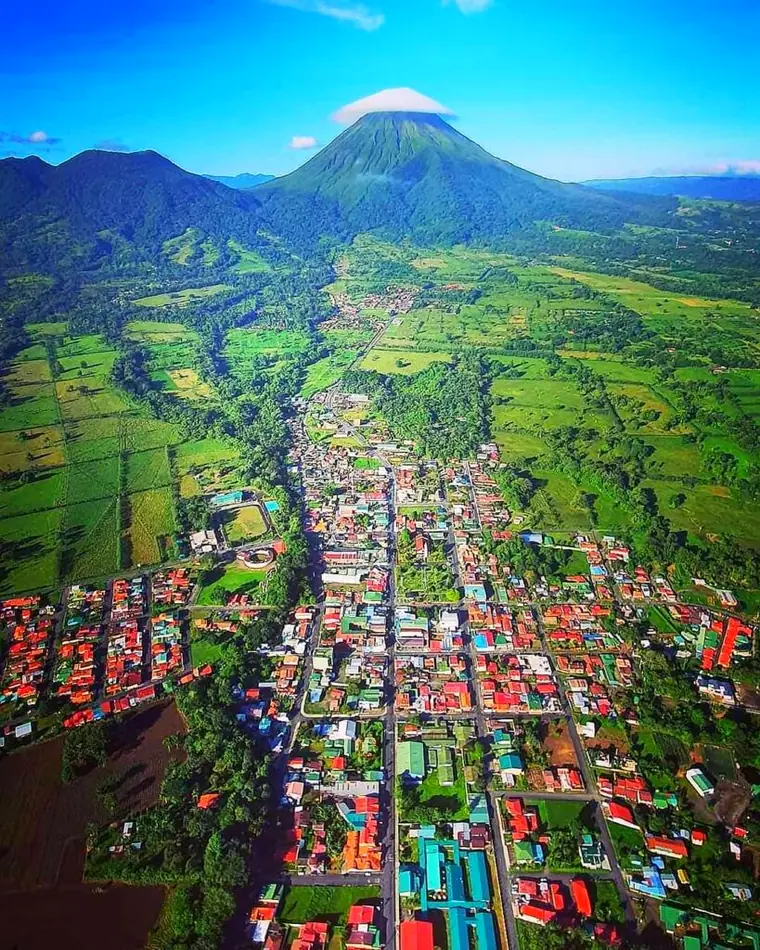
Arenal has a reputation for always being hidden. It is true that the summit spends much of its time in cloud, but the window to see it whole is fairly predictable: between 6 and 9 in the morning.
In the green season the previous afternoon's downpour scrubs the humidity out of the air. Dawn breaks cleaner. It is not unusual for September and October — the months everyone avoids — to deliver mornings with the cone perfectly sharp, while in January the trade winds pile cloud against the mountain and the volcano stays capped for days at a time.
If seeing the volcano is your priority
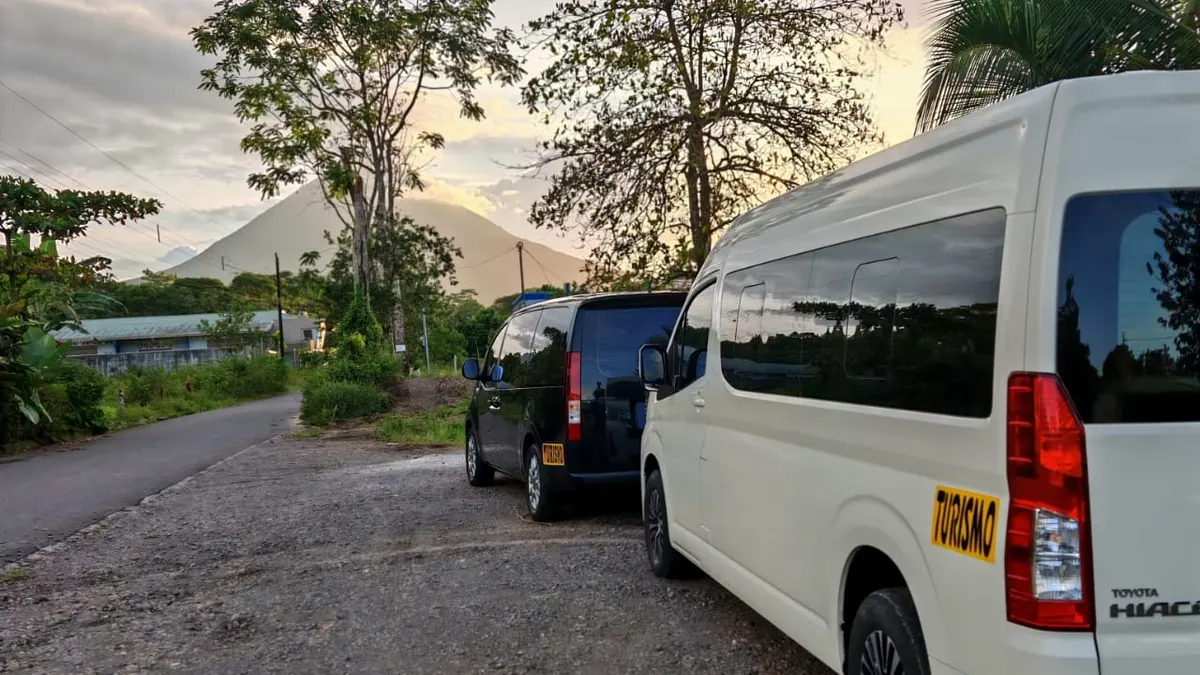
Book your transfer to reach La Fortuna the afternoon before and set an alarm for 5:30. Getting up early once is worth more than staying three nights and only ever looking at it mid-morning.
The waterfalls are at their best
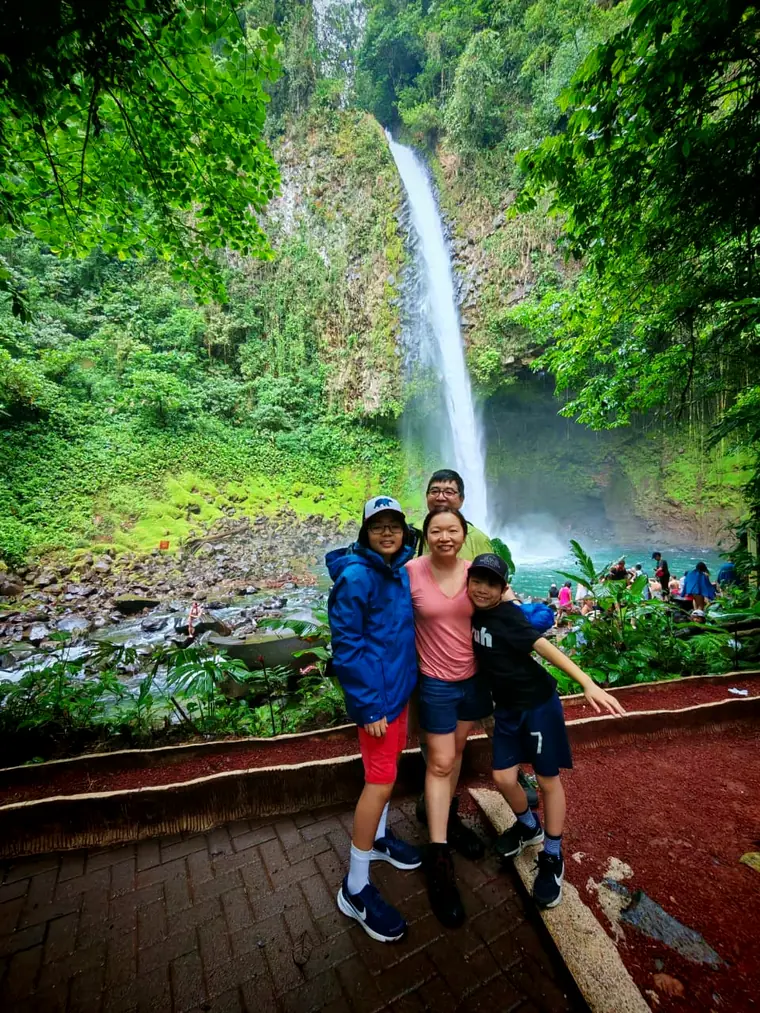
La Fortuna waterfall in March is pretty. In October it is a different thing entirely: a thick, roaring column throwing spray you feel from the staircase. The difference in volume between dry and green season is enormous.
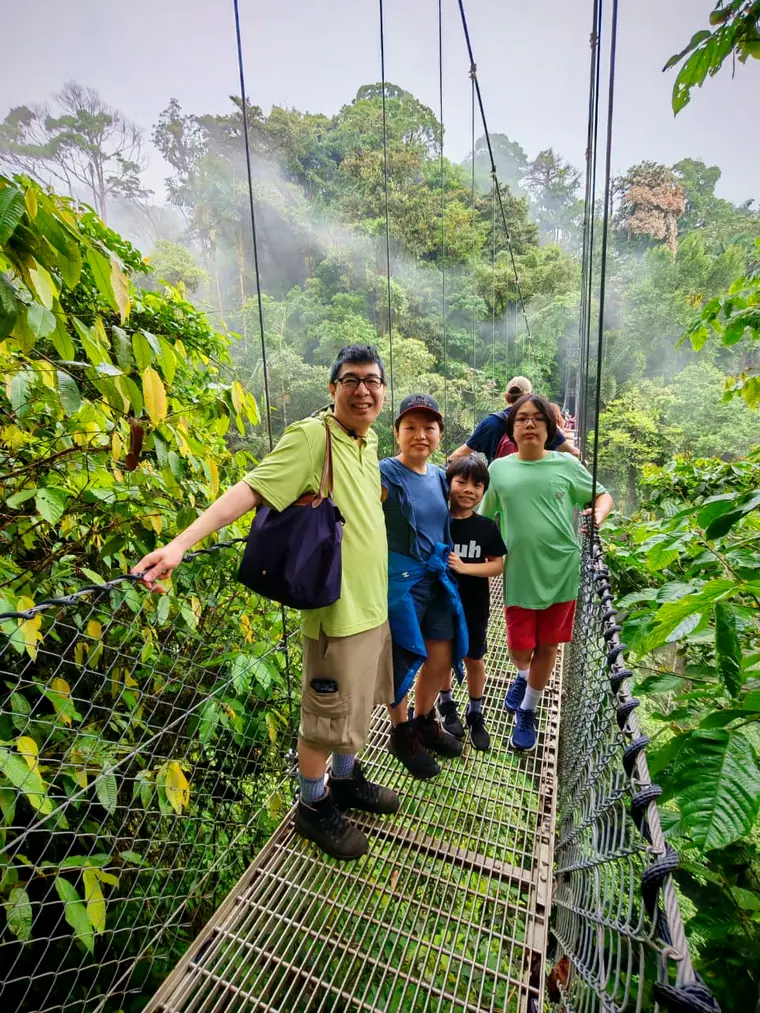
The same goes for Río Celeste, just over an hour away. Its turquoise depends on enough water moving the minerals on the riverbed — in a hard dry spell it can look washed out. With rain it turns that unreal blue you see in photographs.
The trade-off: after truly heavy rain, Río Celeste can cloud over and lose its color for a day or two. That is luck, and worth asking about before you set out.
What genuinely changes: the price
| Item | High season | Green season |
|---|---|---|
| Hotels | Full rate | 25 % to 40 % less |
| Availability | Book months ahead | Nearly always room |
| Park lines | Long, 8 to 11 a.m. | Practically none |
| Private tours | Limited spaces | Smaller groups |
| Hot springs | Packed in the evening | Quiet |
And there is something no table captures: sitting in a hot spring while the downpour comes down is one of the best things this area offers. Water at 40 °C, warm rain falling on your head, steam rising off the surface. Nobody remembers they are getting rained on.
When it is genuinely worth changing the plan
Let us be honest — not everything is equally good.
- September and October on the southern Pacific — Uvita, Drake, Corcovado — are the wettest months in the country. On the Caribbean side those same months are often the best of the year. The country runs opposite climates depending which side you are on.
- Temporales are the real exception: two or three consecutive days of continuous rain, with none of the morning break. They happen a handful of times a year, usually between September and November, and they do force a reshuffle.
- Mountain hikes get muddy and more slippery, and some trails close temporarily. Bring boots or shoes with real grip, not flat trainers.
What to pack
- A light hooded rain jacket. Not an umbrella — useless in wind.
- Two pairs of shoes, so one can dry while you wear the other.
- Dry bags or plastic bags for phone and camera.
- Insect repellent. Rain means more mosquitoes, especially at dusk.
- One extra light change of clothes. In this humidity things take their time to dry.
The short version
In the green season it rains most afternoons and almost never all day. The mornings are yours, the volcano wakes up clearer, the waterfalls are at their peak and hotels cost considerably less. Plan activities early and leave the afternoon open.
Coming in the green season?
We schedule your transfer around the weather, not around a bus timetable. Final price per vehicle.