Anatomía del casado: el plato que nadie inventó y todos reclaman
Cuatro teorías se disputan el origen del nombre y ninguna está documentada. Lo único seguro es que el casado no lo inventó ningún chef: lo armaron cocineras de soda resolviendo el problema de alimentar a un peón por poca plata. Y así salió el plato que define a Costa Rica.
Si usted come una sola cosa en Costa Rica, que sea esta. No porque sea espectacular — no lo es, y ese es precisamente el punto — sino porque es el único plato que se come igual en las siete provincias, todos los días, a la misma hora, por gente de todos los niveles de ingreso.
El nombre: cuatro teorías, ningún documento
Aquí hay que ser honestos, y es algo que casi ninguna guía dice: no se sabe de dónde viene el nombre. Lo que existe son cuatro explicaciones que circulan, todas ubicadas en San José en la segunda mitad del siglo XX, y ninguna con respaldo documental sólido.
- La del peón hambriento. Los trabajadores le pedían a las cocineras de las sodas que les sirvieran como si fueran hombres casados, con la ración completa que se come en casa.
- La del consuelo del soltero. Las sodas armaron un plato completo para que el trabajador soltero comiera como si estuviera en su casa — es decir, como come un casado.
- La del matrimonio de ingredientes. El nombre vendría de que los acompañamientos se "casan" con el arroz, que es la base de todo el plato.
- La de la prueba de la esposa. La recién casada preparaba este plato al marido para mostrarle todo lo que sabía cocinar de un solo golpe, y de ahí él escogía sus preferencias.
Las cuatro son bonitas. Ninguna está probada. Lo que sí está claro es que el casado no nació en un restaurante sino en un mostrador de soda, resolviendo un problema muy concreto: dar de comer completo, barato y rápido a gente que trabajaba con el cuerpo.
La anatomía
Un casado no es una receta. Es una estructura. Estos son los elementos fijos:
| Elemento | Qué es | Por qué está ahí |
|---|---|---|
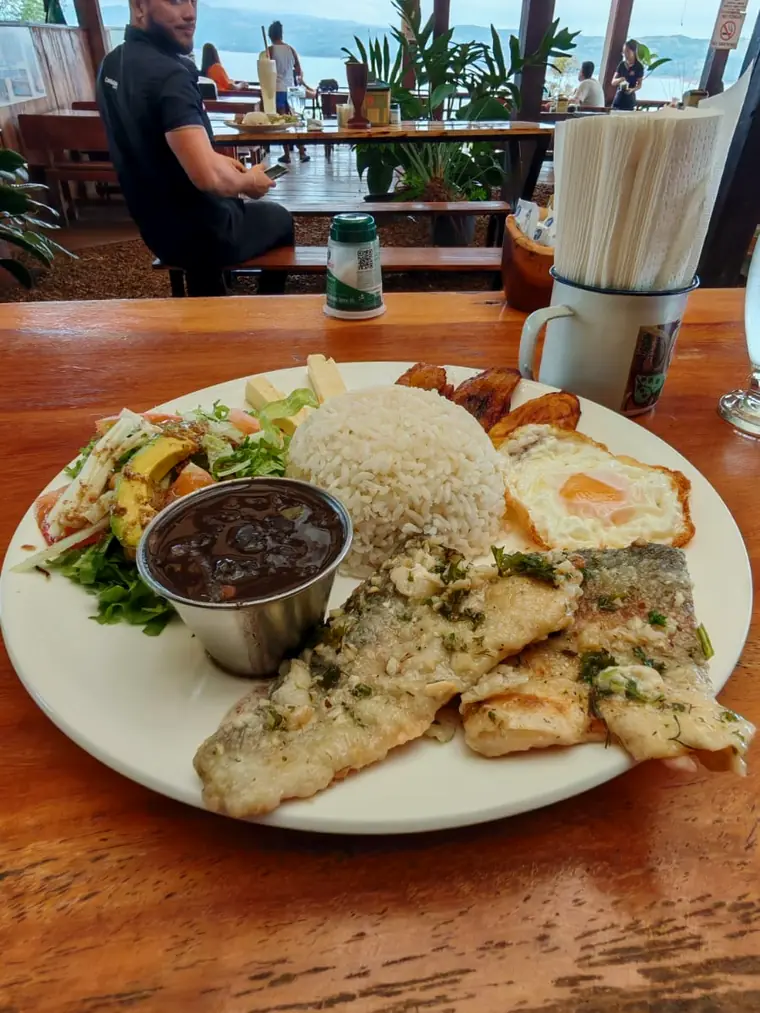
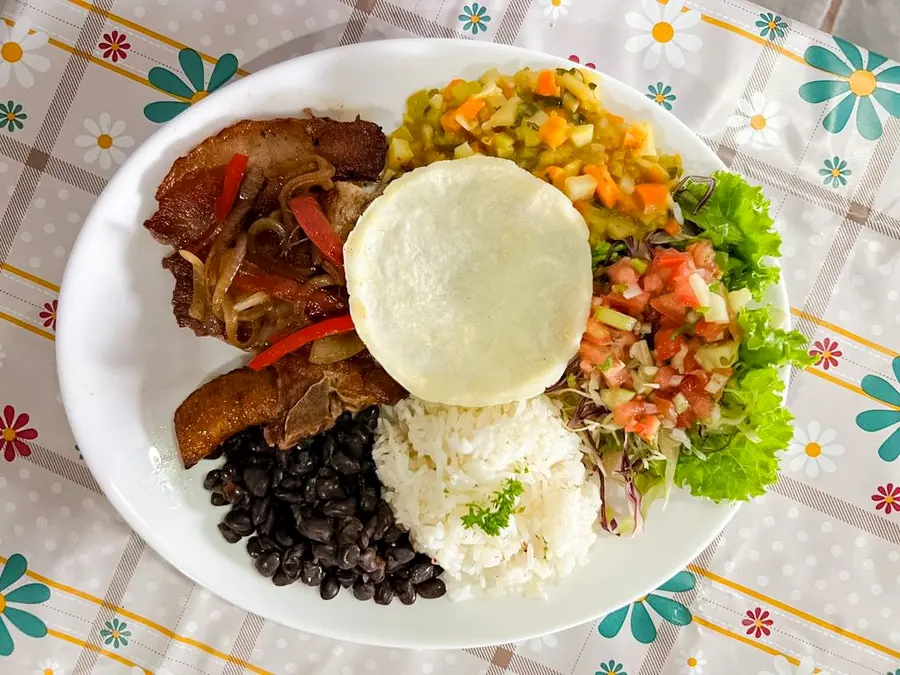
| Arroz blanco | La base, en porción generosa | Es el volumen y el costo bajo del plato |
| Frijoles | Negros en el centro y el Pacífico, rojos hacia el Caribe | La proteína barata; con el arroz forma proteína completa |
| Proteína | Pollo, carne en salsa, chuleta, pescado o bistec encebollado | Es lo que usted escoge y lo que define el precio |
| Plátano maduro | Frito, dulce, casi caramelizado | El contrapunto dulce contra lo salado |
| Ensalada | Repollo con tomate, o de remolacha, o picadillo | Lo fresco y lo crujiente |
| Picadillo | De papa, chayote, arracache o vainica, picado fino | El comodín que cambia cada día |
| Tortilla | De maíz, hecha ahí o comprada esa mañana | Para recoger lo que queda en el plato |
Encima de eso hay dos cosas que aparecen y desaparecen: una tajada de queso Turrialba fresco y sin sal, y un huevo frito si usted lo pide. Ninguna de las dos es obligatoria y ambas mejoran el plato.
Lo que distingue un casado de un "plato del día"
El plato del día se cocina como un solo guiso y se sirve junto. El casado se sirve separado: cada cosa en su lugar del plato, sin tocarse. Esa separación no es estética, es funcional — usted decide en qué orden y en qué combinación come.
Cómo cambia según dónde esté
Valle Central
El más clásico y el más contenido. Frijoles negros, picadillo de papa o de chayote, ensalada de repollo, plátano maduro. Es el casado del que hablan los libros.
Guanacaste
Aparece más el maíz y más la carne. Las tortillas son más gruesas — tortillas palmeadas, hechas a mano — y no es raro que el picadillo sea de arracache. En zona de playa entra el pescado del día.
Caribe, de Limón hacia abajo
Aquí el casado cambia de fondo, no de forma. El arroz puede venir cocinado en leche de coco, los frijoles son rojos, y aparece el rice and beans como acompañamiento o como reemplazo. Si le ofrecen pollo caribeño con especias, dele que sí.
Zona norte y La Fortuna
Es zona ganadera, así que la carne suele ser mejor y más barata que en la costa. El picadillo de vainica y el de chayote son los más comunes. La olla de carne del domingo es institución.
Cómo reconocer uno bueno
- El plátano maduro debe estar oscuro en los bordes. Si está amarillo pálido, lo frieron verde y va a saber a almidón.
- Los frijoles deben tener caldo, no estar secos. El caldito se mezcla con el arroz y es la mitad del sabor.
- El picadillo debe cambiar de día en día. Si el martes y el jueves es idéntico, se cocinó en volumen y se congeló.
- La proteína no debe nadar en salsa. Mucha salsa suele ser para estirar poca carne.
- La ensalada debe estar fría y recién picada, no marchita en la vitrina desde las nueve de la mañana.
Del asiento del conductor
El mejor casado casi nunca está sobre la carretera principal. Está a tres o cuatro kilómetros metido en un desvío, en el pueblo por donde la carretera pasaba antes de que hicieran la variante. Ahí quedaron las sodas viejas, con la clientela de siempre y sin turistas que las obliguen a subir precios.
Entre La Fortuna y Monteverde, entre Liberia y las playas, entre San José y Manuel Antonio hay tres o cuatro de esas en cada tramo. Nosotros sabemos cuáles, y la parada de almuerzo va incluida en el traslado estándar — solo avísenos al reservar. Si además quiere convertir el viaje en paseo, con miradores y tiempo para bajarse a ver, eso es el Tropical Experts VIP.
Una última cosa
El casado no es comida de turista. No sale en las fotos de Instagram, no tiene presentación y el plato es de melamina. Pero es lo que come un país entero al mediodía, y por eso dice más sobre Costa Rica que cualquier cosa que le sirvan en un hotel con vista al volcán.
Pídalo con pollo la primera vez. Después ya sabrá con qué.
Lo esencial
Arroz, frijoles, proteína, plátano maduro, ensalada, picadillo y tortilla, servidos separados en el mismo plato. Nació en las sodas para alimentar trabajadores, no en un restaurante. El nombre tiene cuatro explicaciones y ninguna comprobada. Cambia de provincia en provincia y el mejor está siempre fuera de la carretera principal.
Fuentes consultadas
Anatomy of the casado: the dish nobody invented and everybody claims
Four theories compete over where the name came from and not one is documented. The only certainty is that no chef invented the casado: it was assembled by soda cooks solving the problem of feeding a labourer on very little money. And out of that came the dish that defines Costa Rica.
If you eat one thing in Costa Rica, make it this. Not because it is spectacular — it is not, and that is precisely the point — but because it is the only dish eaten the same way in all seven provinces, every day, at the same hour, by people at every income level.
The name: four theories, no documents
Here we have to be honest, and it is something almost no guide says: nobody knows where the name comes from. What exists are four explanations in circulation, all placed in San José in the second half of the twentieth century, and none with solid documentary backing.
- The hungry labourer. Workers asked soda cooks to serve them as if they were married men, with the full portion you get at home.
- The bachelor's consolation. Sodas assembled a complete plate so the single worker could eat as if he were at home — that is, as a married man eats.
- The marriage of ingredients. The name would come from the side dishes being "married" to the rice, which is the base of the whole plate.
- The wife's audition. A newly married woman would cook this for her husband to show everything she could make at once, and from it he would pick his favourites.
All four are charming. None is proven. What is clear is that the casado was not born in a restaurant but at a soda counter, solving a very concrete problem: feeding people who worked with their bodies, completely, cheaply and fast.
The anatomy
A casado is not a recipe. It is a structure. These are the fixed elements:
| Element | What it is | Why it is there |
|---|---|---|
| White rice | The base, in a generous portion | It is the volume and the low cost of the plate |
| Beans | Black in the centre and Pacific, red towards the Caribbean | Cheap protein; with rice it forms a complete protein |
| Protein | Chicken, beef in sauce, pork chop, fish or steak with onions | What you choose, and what sets the price |
| Ripe plantain | Fried, sweet, almost caramelised | The sweet counterpoint against the savoury |
| Salad | Cabbage with tomato, or beetroot, or picadillo | The fresh and the crunch |
| Picadillo | Finely chopped potato, chayote, arracacha or green bean | The wildcard that changes daily |
| Tortilla | Corn, made there or bought that morning | To gather up what is left on the plate |
On top of that, two things come and go: a slice of fresh Turrialba cheese, unsalted, and a fried egg if you ask. Neither is compulsory and both improve the plate.
What separates a casado from a "plato del día"
The plate of the day is cooked as one stew and served together. The casado is served separated: each thing in its own place, not touching. That separation is not decorative, it is functional — you decide in what order and in what combination you eat.
How it changes depending where you are
Central Valley
The most classic and the most restrained. Black beans, potato or chayote picadillo, cabbage salad, ripe plantain. This is the casado the books describe.
Guanacaste
More corn and more beef. The tortillas are thicker — tortillas palmeadas, shaped by hand — and the picadillo is often arracacha. On the coast the fish of the day comes in.
The Caribbean, from Limón south
Here the casado changes in substance, not in shape. The rice may be cooked in coconut milk, the beans are red, and rice and beans appears as a side or a replacement. If they offer you Caribbean spiced chicken, say yes.
Northern zone and La Fortuna
This is cattle country, so the beef tends to be better and cheaper than on the coast. Green bean and chayote picadillo are the most common. Sunday's olla de carne is an institution.
How to recognise a good one
- The ripe plantain should be dark at the edges. If it is pale yellow, they fried it green and it will taste of starch.
- The beans should have broth, not be dry. That liquid mixes into the rice and is half the flavour.
- The picadillo should change from day to day. If Tuesday and Thursday are identical, it was cooked in bulk and frozen.
- The protein should not be swimming in sauce. Heavy sauce usually means stretching a small amount of meat.
- The salad should be cold and freshly chopped, not wilting in the display case since nine in the morning.
From the driver's seat
The best casado is almost never on the main road. It is three or four kilometres down a turning, in the village the highway went through before they built the bypass. That is where the old sodas stayed, with their lifelong customers and without tourists pushing prices up.
Between La Fortuna and Monteverde, between Liberia and the beaches, between San José and Manuel Antonio there are three or four of those on each stretch. We know which ones, and the lunch stop is included in the standard transfer — just tell us when you book. If you also want to turn the drive into an outing, with lookouts and time to get out and look, that is Tropical Experts VIP.
One last thing
The casado is not tourist food. It does not photograph well, it has no plating and the plate is melamine. But it is what an entire country eats at midday, and for that reason it says more about Costa Rica than anything served to you in a hotel with a volcano view.
Order it with chicken the first time. After that you will know what you want.
The short version
Rice, beans, protein, ripe plantain, salad, picadillo and tortilla, served separated on the same plate. Born in the sodas to feed workers, not in a restaurant. The name has four explanations and none is proven. It shifts from province to province, and the best one is always off the main road.
Sources
El mejor casado no está en la carretera principal
The best casado is not on the main road
Está a cuatro kilómetros, en un desvío que solo conocen los que manejan la ruta. La parada para almorzar va incluida: pídala al reservar y el conductor lo lleva.
It is four kilometres off it, down a turning only people who drive the route know. The lunch stop is included: ask for it when you book and the driver takes you.