La Fortuna en temporada de lluvia: por qué sigue siendo la mejor época
Medio mundo evita Costa Rica entre mayo y noviembre por miedo a la lluvia. Los que vienen igual encuentran hoteles a mitad de precio, cataratas con el triple de agua y parques sin fila. Le explicamos cómo funciona de verdad la lluvia en La Fortuna.
En Costa Rica le decimos temporada verde, y no es puro mercadeo. De mayo a noviembre el país cambia de color: lo que en marzo era pasto amarillo en abril ya es verde intenso, los ríos se llenan y el bosque se pone denso.
Pero la razón por la que insistimos con la temporada verde no es estética. Es que la lluvia tropical no funciona como la gente se imagina.
No llueve todo el día
El error más común es pensar que llover en temporada verde significa un día gris de lluvia continua, como en Europa o Norteamérica. Casi nunca es así.
El patrón normal en La Fortuna es este: mañanas despejadas o con nubes altas, calor subiendo hasta el mediodía, y el aguacero entrando entre la una y las cuatro de la tarde. Cae fuerte —de verdad fuerte— durante una o dos horas, y después escampa. Muchas tardes terminan con el cielo abierto y un atardecer limpio.
Eso significa que usted tiene toda la mañana para hacer lo que vino a hacer. Y las mañanas de temporada verde suelen ser mejores que las de temporada seca, por una razón que a mucha gente le sorprende.
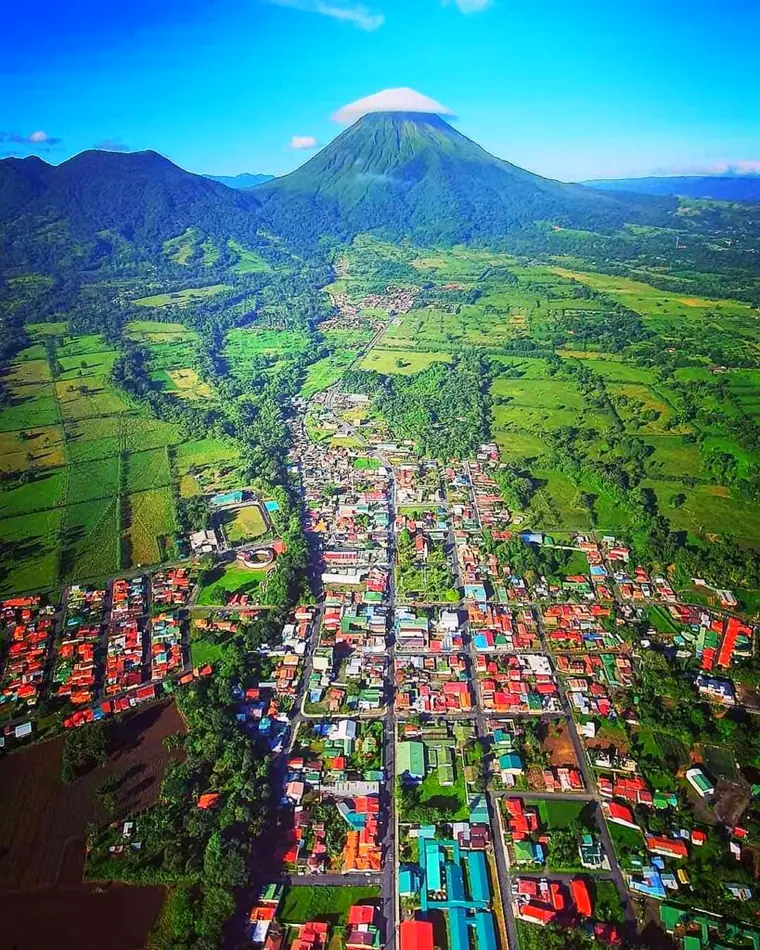
El volcán se ve mejor, no peor
El Arenal tiene fama de estar siempre tapado. Es cierto que la cima pasa buena parte del tiempo entre nubes, pero la ventana para verlo completo es bastante predecible: entre las 6 y las 9 de la mañana.
En temporada verde el aguacero de la tarde anterior barre la humedad de la atmósfera. Amanece más limpio. No es raro que en setiembre y octubre —los meses que todo el mundo evita— haya amaneceres con el cono perfectamente definido, mientras que en enero, con el viento alisio empujando nubes contra la montaña, el volcán amanece encapotado varios días seguidos.
Si su prioridad es ver el volcán
Pida el traslado para llegar a La Fortuna la tarde anterior y ponga el despertador a las 5:30. Levantarse temprano un día vale más que quedarse tres noches y verlo siempre a media mañana.
Las cataratas están en su mejor momento
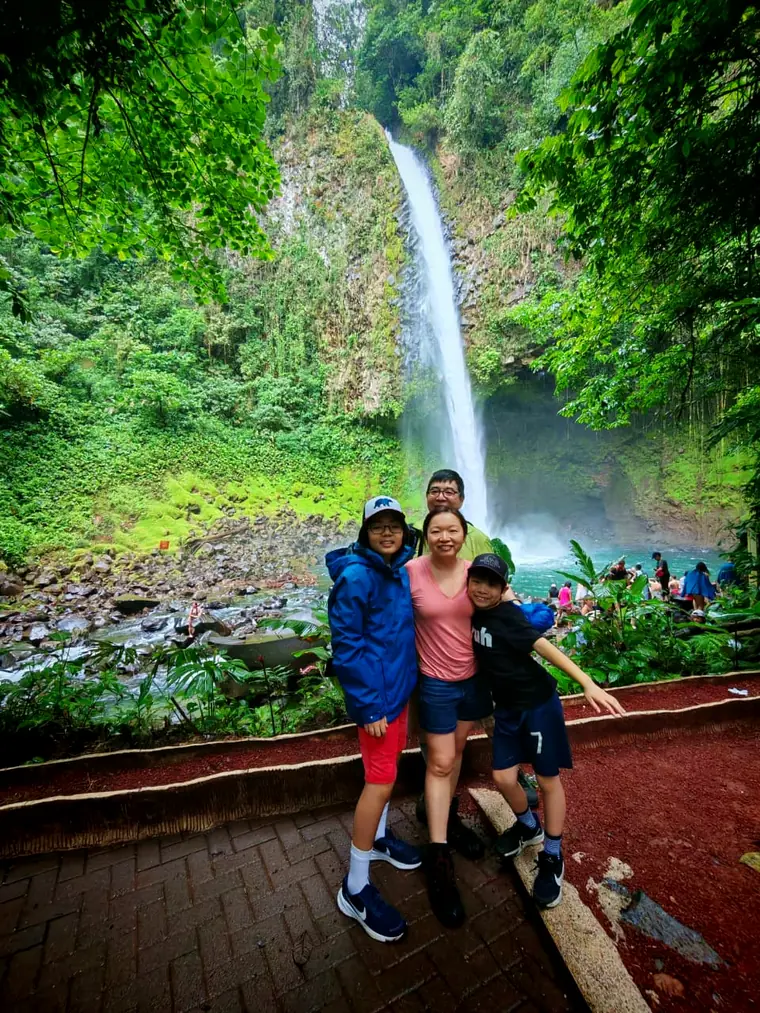
La catarata de La Fortuna en marzo es bonita. En octubre es otra cosa: un chorro grueso, ruidoso, con neblina de agua que se siente desde la escalera. La diferencia de caudal entre temporada seca y verde es enorme.
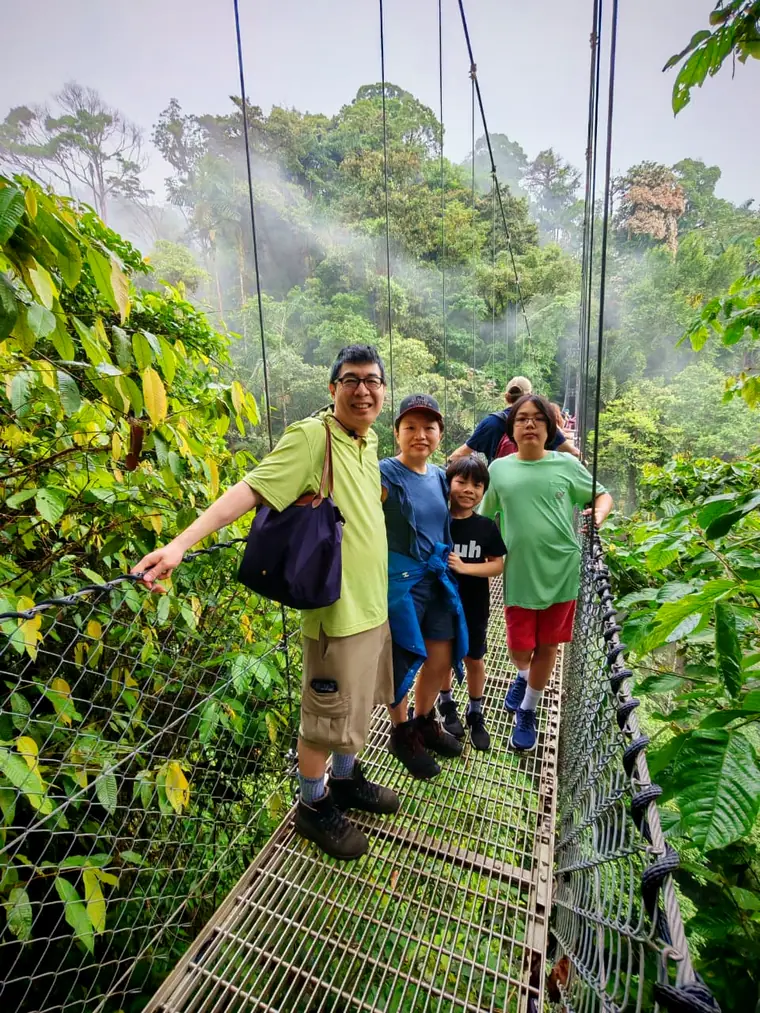
Lo mismo con el río Celeste, que queda a poco más de una hora. Su color turquesa depende de que baje agua suficiente para mover los minerales del fondo — en plena sequía a veces se ve deslavado. Con lluvia se pone de ese azul irreal de las fotos.
La contra: cuando llueve muchísimo, el río Celeste puede enturbiarse y perder el color por un día o dos. Es cuestión de suerte y de preguntar antes de salir.
Lo que sí cambia de verdad: el precio
| Concepto | Temporada alta | Temporada verde |
|---|---|---|
| Hoteles | Tarifa plena | Entre 25 % y 40 % menos |
| Disponibilidad | Reservar con meses | Casi siempre hay campo |
| Filas en parques | Largas de 8 a 11 a. m. | Prácticamente ninguna |
| Tours privados | Cupo limitado | Grupos más pequeños |
| Termales | Llenas en la tarde | Tranquilas |
Y hay algo que no aparece en ninguna tabla: en temporada verde bañarse en aguas termales mientras cae el aguacero es de las mejores experiencias que da esta zona. El agua a 40 grados, la lluvia tibia cayendo encima y el vapor subiendo. Nadie se acuerda de que estaba lloviendo.
Cuándo sí conviene mover el plan
Seamos honestos: no todo es igual de bueno.
- Setiembre y octubre en el Pacífico sur —Uvita, Drake, Corcovado— son los meses más lluviosos del país. En el Caribe, en cambio, esos mismos meses suelen ser de los mejores del año. El país tiene climas opuestos según el lado.
- Los temporales son la excepción real: dos o tres días seguidos de lluvia continua, sin la pausa de la mañana. Pasan pocas veces al año, generalmente entre setiembre y noviembre, y sí obligan a reacomodar el plan.
- Las caminatas de montaña con barro son más resbalosas y algunos senderos cierran temporalmente. Bota o zapato con buena suela, no tenis lisos.
Qué empacar
- Impermeable liviano con capucha. No sombrilla — con viento no sirve de nada.
- Dos pares de zapatos, para poder secar uno mientras usa el otro.
- Bolsas plásticas o funda seca para el celular y la cámara.
- Repelente. Con lluvia hay más zancudos, sobre todo al atardecer.
- Una muda liviana de más. Con la humedad, la ropa tarda en secar.
Lo esencial
En temporada verde llueve casi todas las tardes, casi nunca todo el día. Las mañanas son suyas, el volcán amanece más despejado, las cataratas están en su punto y los hoteles cuestan bastante menos. Planifique las actividades temprano y deje la tarde libre.
La Fortuna in the rainy season: why it is still the best time to come
Half the world avoids Costa Rica between May and November for fear of rain. Those who come anyway find hotels at half price, waterfalls at triple volume and parks with no queues. Here is how the rain actually works in La Fortuna.
In Costa Rica we call it the green season, and that is not just marketing. From May to November the country changes colour: what was yellow pasture in March is deep green by April, the rivers fill and the forest thickens.
But the reason we push the green season is not scenery. It is that tropical rain does not behave the way people imagine.
It does not rain all day
The commonest mistake is picturing green-season rain as a grey day of continuous drizzle, the way it works in Europe or North America. It almost never is.
The normal pattern in La Fortuna runs like this: clear mornings or high cloud, heat building towards midday, and the downpour arriving between one and four in the afternoon. It falls hard — genuinely hard — for an hour or two, and then it clears. Many afternoons end with open sky and a clean sunset.
That means you have the entire morning to do what you came for. And green-season mornings are often better than dry-season ones, for a reason that surprises most people.
The volcano shows itself more, not less
Arenal has a reputation for always being hidden. It is true that the summit spends much of its time in cloud, but the window to see it whole is fairly predictable: between 6 and 9 in the morning.
In the green season the previous afternoon's downpour scrubs the humidity out of the air. Dawn breaks cleaner. It is not unusual for September and October — the months everyone avoids — to deliver mornings with the cone perfectly sharp, while in January the trade winds pile cloud against the mountain and the volcano stays capped for days at a time.
If seeing the volcano is your priority
Book your transfer to reach La Fortuna the afternoon before and set an alarm for 5:30. Getting up early once is worth more than staying three nights and only ever looking at it mid-morning.
The waterfalls are at their best
La Fortuna waterfall in March is pretty. In October it is a different thing entirely: a thick, roaring column throwing spray you feel from the staircase. The difference in volume between dry and green season is enormous.
The same goes for Río Celeste, just over an hour away. Its turquoise depends on enough water moving the minerals on the riverbed — in a hard dry spell it can look washed out. With rain it turns that unreal blue you see in photographs.
The trade-off: after truly heavy rain, Río Celeste can cloud over and lose its colour for a day or two. That is luck, and worth asking about before you set out.
What genuinely changes: the price
| Item | High season | Green season |
|---|---|---|
| Hotels | Full rate | 25 % to 40 % less |
| Availability | Book months ahead | Nearly always room |
| Park queues | Long, 8 to 11 a.m. | Practically none |
| Private tours | Limited spaces | Smaller groups |
| Hot springs | Packed in the evening | Quiet |
And there is something no table captures: sitting in a hot spring while the downpour comes down is one of the best things this area offers. Water at 40 °C, warm rain falling on your head, steam rising off the surface. Nobody remembers they are getting rained on.
When it is genuinely worth changing the plan
Let us be honest — not everything is equally good.
- September and October on the southern Pacific — Uvita, Drake, Corcovado — are the wettest months in the country. On the Caribbean side those same months are often the best of the year. The country runs opposite climates depending which side you are on.
- Temporales are the real exception: two or three consecutive days of continuous rain, with none of the morning break. They happen a handful of times a year, usually between September and November, and they do force a reshuffle.
- Mountain hikes get muddy and more slippery, and some trails close temporarily. Bring boots or shoes with real grip, not flat trainers.
What to pack
- A light hooded rain jacket. Not an umbrella — useless in wind.
- Two pairs of shoes, so one can dry while you wear the other.
- Dry bags or plastic bags for phone and camera.
- Insect repellent. Rain means more mosquitoes, especially at dusk.
- One extra light change of clothes. In this humidity things take their time to dry.
The short version
In the green season it rains most afternoons and almost never all day. The mornings are yours, the volcano wakes up clearer, the waterfalls are at their peak and hotels cost considerably less. Plan activities early and leave the afternoon open.
¿Viene en temporada verde?
Coming in the green season?
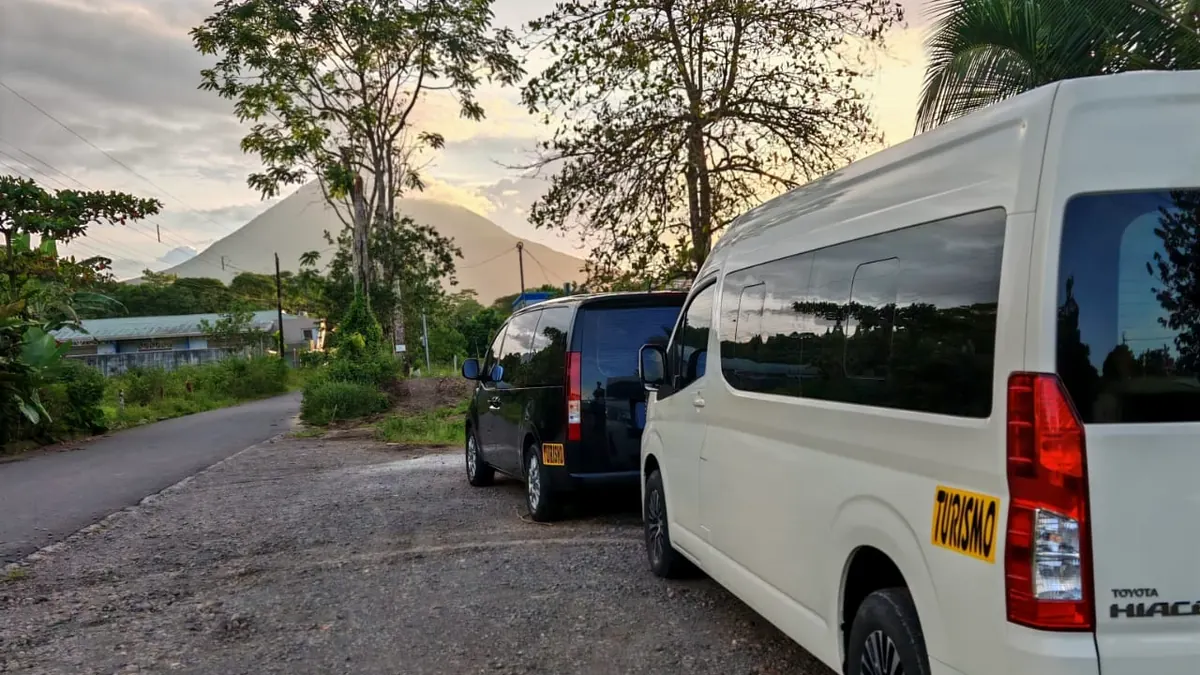
Le coordinamos el traslado con la hora que le convenga para el clima, no la que le quede al bus. Precio final por vehículo.
We schedule your transfer around the weather, not around a bus timetable. Final price per vehicle.