La soda: el restaurante que Costa Rica inventó sin proponérselo
Va manejando por cualquier carretera del país y ve el rótulo: SODA, en letras pintadas a mano sobre una casa con tres mesas. No es un bar ni una refresquería. Es el lugar donde come el país entero — y donde usted va a comer mejor y más barato que en cualquier restaurante de la zona turística.
Empecemos por lo que confunde a todo el mundo: una soda no vende sodas. Vende almuerzos. Y el nombre, que parece un error de traducción, es en realidad un fósil lingüístico — el rastro de un negocio que ya no existe.
De dónde viene la palabra
En los años cuarenta y cincuenta, Estados Unidos vivía la época dorada de las soda fountains: mostradores donde se preparaban bebidas gaseosas al momento, mezclando agua carbonatada de un cilindro de CO₂ con jarabes de sabores. Casi siempre estaban dentro de las farmacias.
La moda llegó a San José a principios de los cincuenta con el nombre traducido a medias: fuente de soda. Y llegó igual que en el norte, pegada a las farmacias. Todavía a mediados de los sesenta quedaban dos originales funcionando: una en la Farmacia Iris, cerca del Mercado Central, y otra en la Farmacia Leda, al norte del Hospital San Juan de Dios.
Lo que pasó después es la parte interesante. A finales de los sesenta y en los setenta, esos mostradores empezaron a servir algo de comer junto con la bebida. Primero un emparedado. Después un desayuno. Después el almuerzo completo. Y en algún momento la bebida dejó de ser el negocio y la comida pasó a serlo — pero el rótulo nunca cambió.
Así que cuando usted entra a una soda en Guanacaste o en Limón y pide un casado, está usando el nombre de una máquina de gaseosas que desapareció hace medio siglo. Nadie lo decidió. Simplemente el nombre le ganó al negocio.
El dato que rompe el hielo
Si quiere caerle bien a un tico, pregúntele por qué se llaman sodas. La mayoría no sabe. Es de esas cosas que uno usa todos los días sin preguntarse de dónde salieron.
Cómo es una soda por dentro
No hay dos iguales, pero casi todas comparten la misma anatomía:
- Un mostrador o una vitrina caliente donde se ve la comida del día. No hay carta con fotos: usted ve lo que hay.
- Una pizarra en la pared con los precios escritos a mano y corregidos encima cuando suben. Ahí está el menú real.
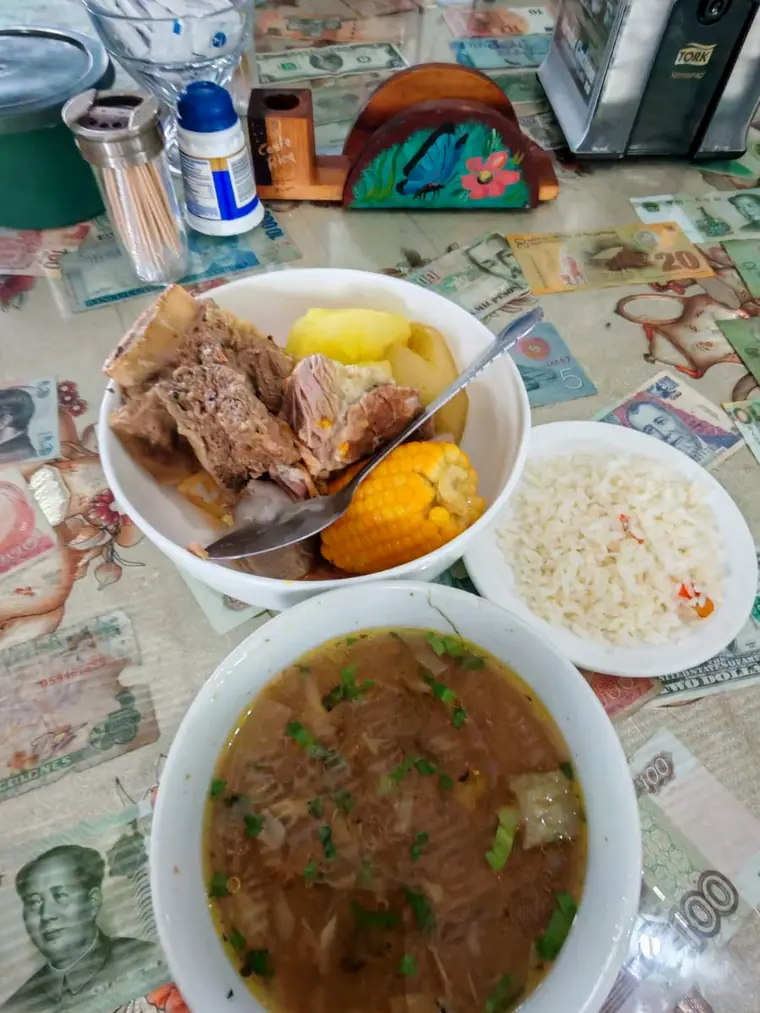
- Entre tres y ocho mesas, casi siempre con hule de mantel, casi siempre bajo un techo de zinc.
- Una licuadora que no para. Los batidos de fruta son la mitad del negocio.
- Una señora que cocina y atiende, o dos. Es un negocio familiar; el nombre de la soda suele ser el de ella.
Las reglas no escritas
Se pide en la barra o desde la mesa, según el lugar
Si hay gente sentada esperando, siéntese. Si todos hacen fila, haga fila. Observe diez segundos antes de decidir y no se va a equivocar.
El batido se pide "en agua" o "en leche"
Esta es la pregunta que descoloca a todo extranjero. El batido de mora, de cas, de maracuyá o de guanábana se licúa con agua o con leche, y hay que decirlo. En agua queda más ligero y más ácido; en leche queda cremoso, casi un postre. Si no dice nada, le van a preguntar — y esa pregunta es la señal de que ya lo están tratando como cliente y no como turista.
El precio de la pizarra suele ser el precio final
En los restaurantes formales de Costa Rica la factura suma 10 % de servicio y 13 % de IVA sobre el precio de la carta, así que la cuenta llega bastante más alta de lo que usted calculó. En las sodas, lo que dice la pizarra es normalmente lo que usted paga. Es una diferencia de expectativa que vale la pena tener clara antes de sentarse en cualquiera de los dos.
No busque menú en inglés
Las sodas buenas rara vez lo tienen, y eso es justamente buena señal. Con tres palabras se resuelve: casado, con pollo o con carne, y un fresco de… lo que haya.
Del asiento del conductor
La forma más rápida de saber si una soda es buena: mire los carros parqueados afuera al mediodía. Si hay camiones de reparto, patrullas o busetas de trabajadores, entre sin pensarlo. Esa gente come ahí todos los días y no perdona.
La segunda señal es la hora. Una soda que a las 12:30 está llena y a la 1:45 ya no tiene casados es una soda que cocina lo del día y lo vende. Una que a las 3 de la tarde todavía tiene de todo, cocinó de más.
Los números, que es donde se ve la diferencia
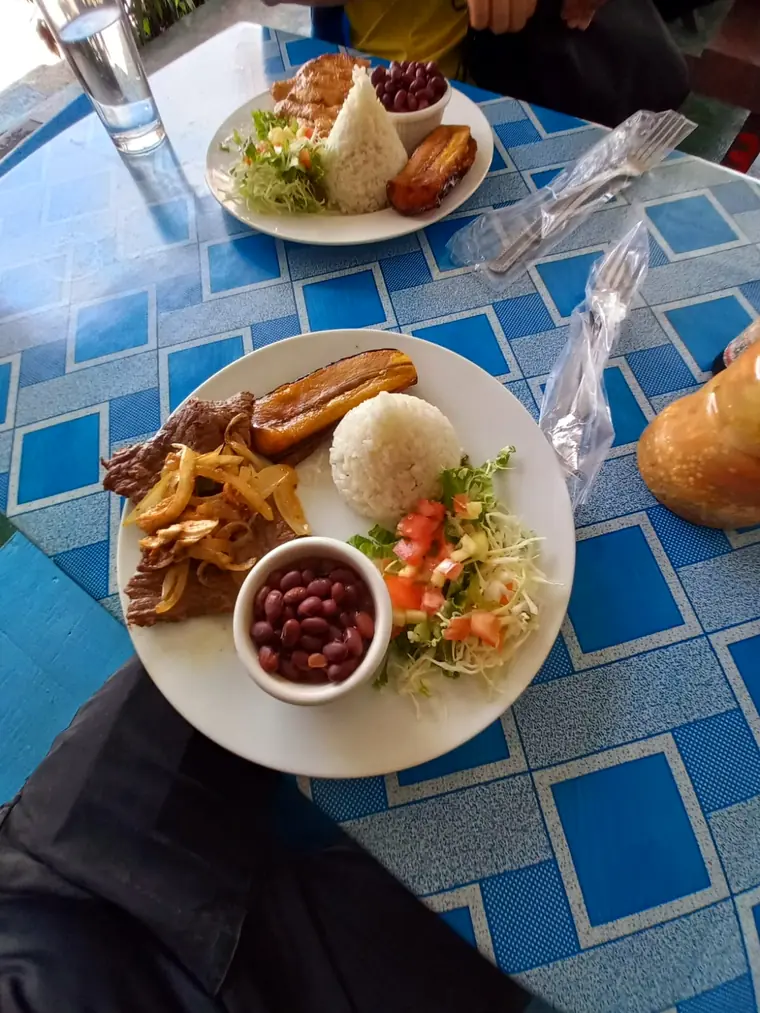
Un casado completo en una soda de carretera cuesta entre ₡3.500 y ₡5.000 — unos siete a diez dólares — e incluye arroz, frijoles, ensalada, plátano maduro, una proteína y casi siempre una tortilla. Con eso un adulto queda lleno.
El mismo almuerzo, en un restaurante de zona turística con menú en inglés y foto de cada plato, le va a salir entre 18 y 25 dólares, más el 10 % de servicio y el 13 % de IVA.
Para una familia de cuatro que almuerza fuera diez días, la diferencia es de varios cientos de dólares en el viaje. Y la comida de la soda, casi siempre, es mejor: se cocinó esa mañana, en cantidad pequeña, para gente que vuelve mañana.
Qué pedir si nunca ha entrado a una
- Casado con pollo, si es su primera vez. Es el plato nacional en su forma más honesta y le da a probar cinco cosas de un solo golpe.
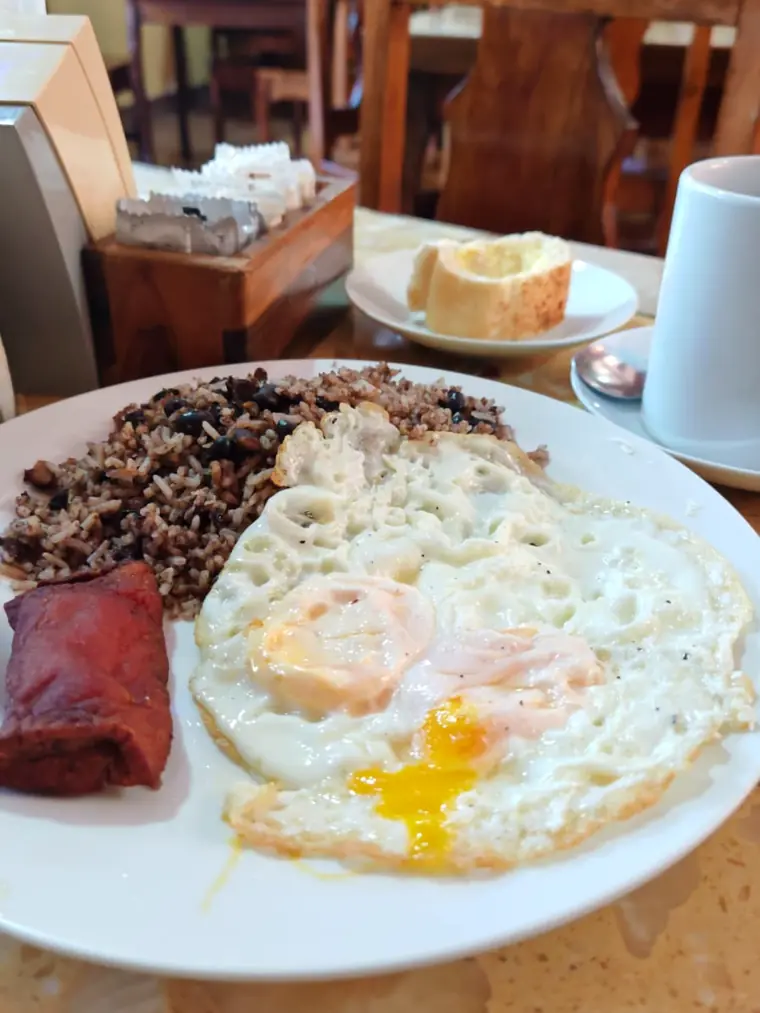
- Gallo pinto con huevo, si es de mañana. Se sirve hasta las once y es el desayuno del país.
- Olla de carne, si es domingo y hace frío. Sopa de res con yuca, ñampí, elote y plátano. No la va a encontrar en un hotel.
- Un fresco de cas, aunque no sepa qué es. Es una fruta ácida que casi no sale de Costa Rica y no se parece a nada que usted conozca.
- Chifrijo, si quiere lo que come la gente joven. Frijoles, chicharrón, arroz y pico de gallo en un mismo tazón.
Lo esencial
La soda es un mostrador de gaseosas de los años cincuenta que se convirtió en restaurante y se quedó con el nombre viejo. Hoy es donde come el país: comida del día, precio final en la pizarra, entre siete y diez dólares el almuerzo completo. Si ve camiones parqueados afuera al mediodía, ahí es.
Fuentes consultadas
The soda: the restaurant Costa Rica invented by accident
You are driving down any road in the country and you see the sign: SODA, hand-painted on a house with three tables. It is not a bar and it is not a drinks stand. It is where the entire country eats — and where you will eat better and cheaper than at any restaurant in the tourist strip.
Start with the thing that confuses everyone: a soda does not sell soda. It sells lunch. And the name, which looks like a translation error, is actually a linguistic fossil — the trace of a business that no longer exists.
Where the word comes from
In the 1940s and 50s the United States was living the golden age of the soda fountain: counters where fizzy drinks were mixed on the spot, carbonated water from a CO₂ cylinder combined with flavoured syrups. They were almost always inside pharmacies.
The fashion reached San José in the early fifties with the name half-translated: fuente de soda. And it arrived the same way it had up north — attached to pharmacies. As late as the mid-sixties two originals were still running: one in the Farmacia Iris, near the Mercado Central, and another in the Farmacia Leda, north of Hospital San Juan de Dios.
What happened next is the interesting part. In the late sixties and through the seventies, those counters began serving something to eat alongside the drink. First a sandwich. Then breakfast. Then a full lunch. And at some point the drink stopped being the business and the food took over — but the sign never changed.
So when you walk into a soda in Guanacaste or Limón and order a casado, you are using the name of a fizzy-drink machine that disappeared half a century ago. Nobody decided this. The name simply outlived the business.
The icebreaker
If you want to win over a Costa Rican, ask why they are called sodas. Most do not know. It is one of those things people use every day without ever wondering where it came from.
What a soda looks like inside
No two are the same, but nearly all share the same anatomy:
- A counter or a warm display case where you can see the day's food. There is no menu with photographs: you see what there is.
- A board on the wall with prices written by hand and corrected over the top when they rise. That is the real menu.
- Between three and eight tables, almost always with an oilcloth cover, almost always under a zinc roof.
- A blender that never stops. Fruit shakes are half the business.
- One woman cooking and serving, or two. It is a family business; the soda is usually named after her.
The unwritten rules
You order at the counter or from the table, depending on the place
If people are sitting and waiting, sit down. If everyone is queueing, queue. Watch for ten seconds before deciding and you will not get it wrong.
Shakes are ordered "en agua" or "en leche"
This is the question that throws every foreigner. A blackberry, cas, passion fruit or soursop shake is blended with either water or milk, and you have to say which. En agua comes out lighter and sharper; en leche comes out creamy, almost a dessert. If you say nothing they will ask you — and that question is the sign that you are being treated as a customer rather than a tourist.
The price on the board is usually the final price
In formal Costa Rican restaurants the bill adds 10% service and 13% VAT on top of the menu price, so the total arrives considerably higher than you calculated. In sodas, what the board says is normally what you pay. It is a difference in expectation worth knowing before you sit down in either.
Do not look for an English menu
Good sodas rarely have one, and that is precisely a good sign. Three words settle it: casado, con pollo or con carne, and un fresco de… whatever they have.
From the driver's seat
The fastest way to know whether a soda is good: look at the vehicles parked outside at midday. If there are delivery lorries, police cars or workers' vans, walk straight in. Those people eat there every day and they do not forgive.
The second sign is the clock. A soda that is full at 12:30 and out of casados by 1:45 is a soda that cooks the day's food and sells it. One that still has everything at three in the afternoon cooked too much.
The numbers, which is where the difference shows
A full casado at a roadside soda costs between ₡3,500 and ₡5,000 — roughly seven to ten dollars — and includes rice, beans, salad, fried ripe plantain, a protein and almost always a tortilla. An adult leaves full.
The same lunch, at a tourist-strip restaurant with an English menu and a photograph of every dish, will run you 18 to 25 dollars, plus 10% service and 13% VAT.
For a family of four eating out over ten days, that is several hundred dollars across the trip. And the soda food is, more often than not, better: it was cooked that morning, in small quantity, for people who will come back tomorrow.
What to order if you have never been in one
- Casado con pollo, if it is your first time. It is the national dish in its most honest form and it lets you taste five things at once.
- Gallo pinto con huevo, in the morning. Served until about eleven, and it is the country's breakfast.
- Olla de carne, if it is Sunday and cool. Beef soup with cassava, taro, corn on the cob and plantain. You will not find it in a hotel.
- A fresco de cas, even if you do not know what it is. A sharp fruit that barely leaves Costa Rica and tastes like nothing you know.
- Chifrijo, if you want what young people eat. Beans, pork crackling, rice and pico de gallo in one bowl.
The short version
The soda is a 1950s fizzy-drink counter that turned into a restaurant and kept the old name. Today it is where the country eats: food of the day, final price on the board, seven to ten dollars for a full lunch. If there are lorries parked outside at midday, that is the one.
Sources
¿Quiere parar en una soda de verdad?
Want to stop at a real soda?
Nuestros conductores paran donde comen ellos, no donde pagan comisión. La parada de almuerzo va incluida en el servicio estándar: solo díganos que quiere comer bien en el camino.
Our drivers stop where they eat themselves, not where they earn a commission. The lunch stop is included in the standard service: just tell us you want to eat well on the way.