Manuel Antonio sin filas ni sorpresas: la guía honesta del parque más visitado
Manuel Antonio es de los parques más pequeños de Costa Rica y el más visitado, y esa combinación tiene consecuencias: cupos que se agotan, un día de cierre que sorprende a medio mundo y playas con reglas distintas a veinte metros una de otra. Nada de eso es problema si llega sabiéndolo.
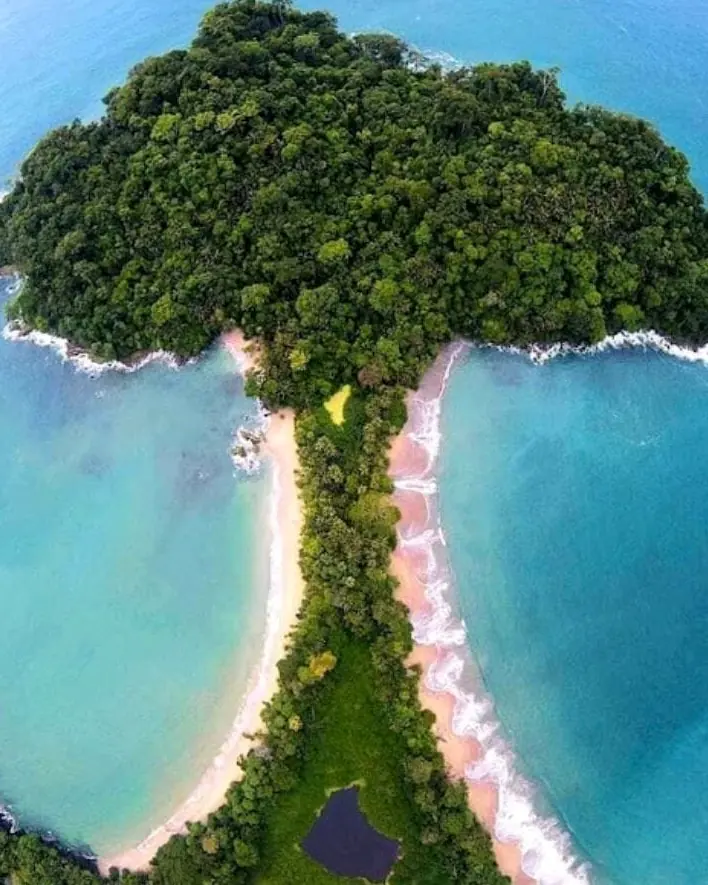
Hay una foto que todo el mundo conoce de Manuel Antonio: una punta de bosque metida en el mar, con una playa clara a cada lado, como un árbol con la copa hacia el Pacífico. Es Punta Catedral, y la franja de arena que la une a tierra firme es la razón de que este parque diminuto reciba más visitas que cualquier otro del país.
La entrada se compra antes, no en la puerta
El cambio que más viajeros ignora: los tiquetes del parque se compran en línea, por adelantado, en el sistema oficial del SINAC. En la entrada no hay venta. Hay cupo diario limitado, y en temporada alta —de diciembre a abril, y julio— los espacios de la mañana se agotan con días de anticipación.
Compre el tiquete apenas tenga fecha, guarde el comprobante en el teléfono y lleve el pasaporte de cada persona, porque la entrada es nominal. Si viaja con nosotros se lo recordamos al reservar el traslado, precisamente porque hemos visto familias llegar hasta la puerta sin tiquete un sábado de enero.
Los martes no abre
El parque cierra todos los martes, todo el año. Parece un detalle menor hasta que se planifica una estadía de dos noches que cae justo en martes. Si Manuel Antonio es su prioridad, arme el itinerario alrededor de ese día — y si le tocó martes, la playa pública de Espadilla no cierra nunca.
Las playas: cuál es cuál
Aquí es donde más gente se confunde, porque hay playas dentro del parque y playas fuera, y se llevan pocos metros entre sí.
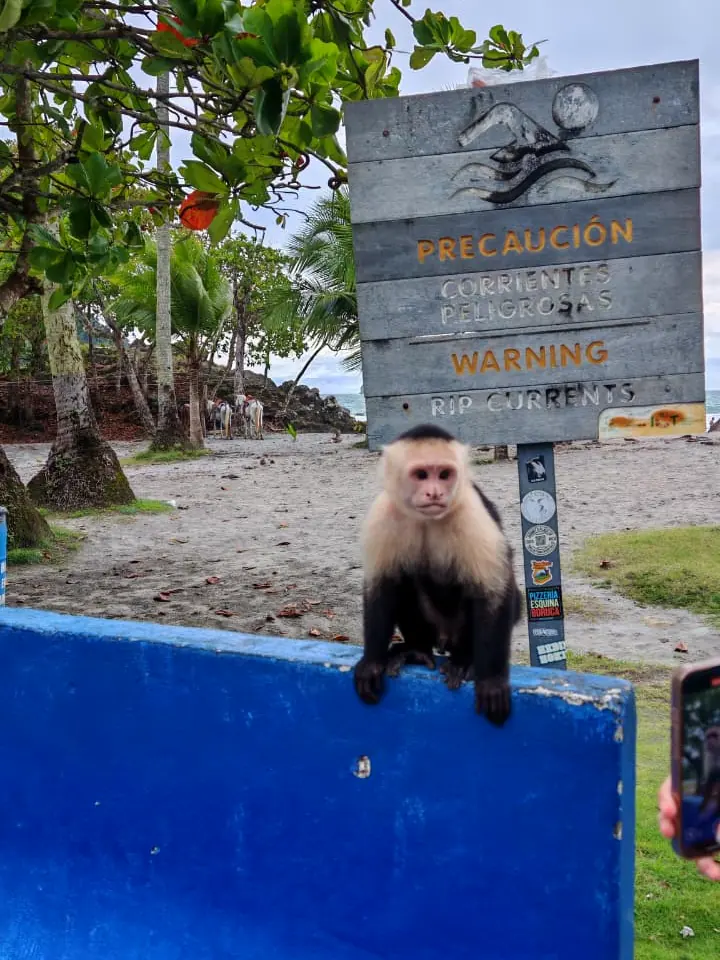
Espadilla Norte es la playa grande y pública, frente a los hoteles y restaurantes. Es gratuita, abierta siempre, con atardeceres serios. También es una playa de mar abierto con corrientes de resaca fuertes: respete los rótulos y pregunte a los salvavidas dónde meterse, porque el punto seguro cambia con la marea.
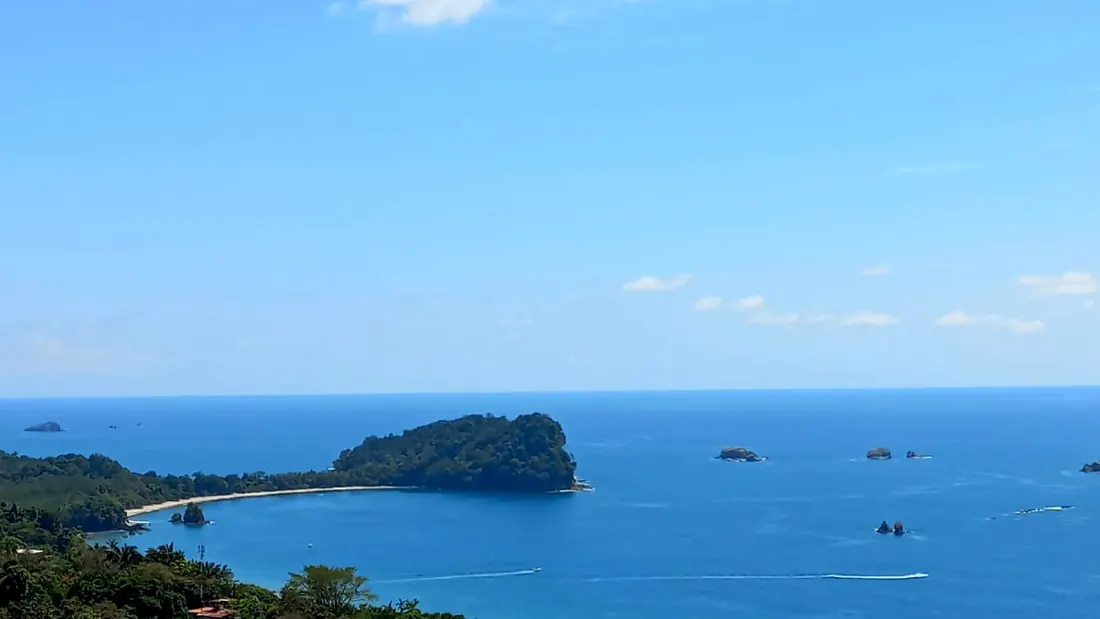
Playa Manuel Antonio, adentro del parque, es la del postal: una media luna protegida por la punta, de agua tranquila, ideal para niños. A diez minutos a pie están Gemelas y Puerto Escondido, más pequeñas y con mucha menos gente.
Los animales se ven de verdad
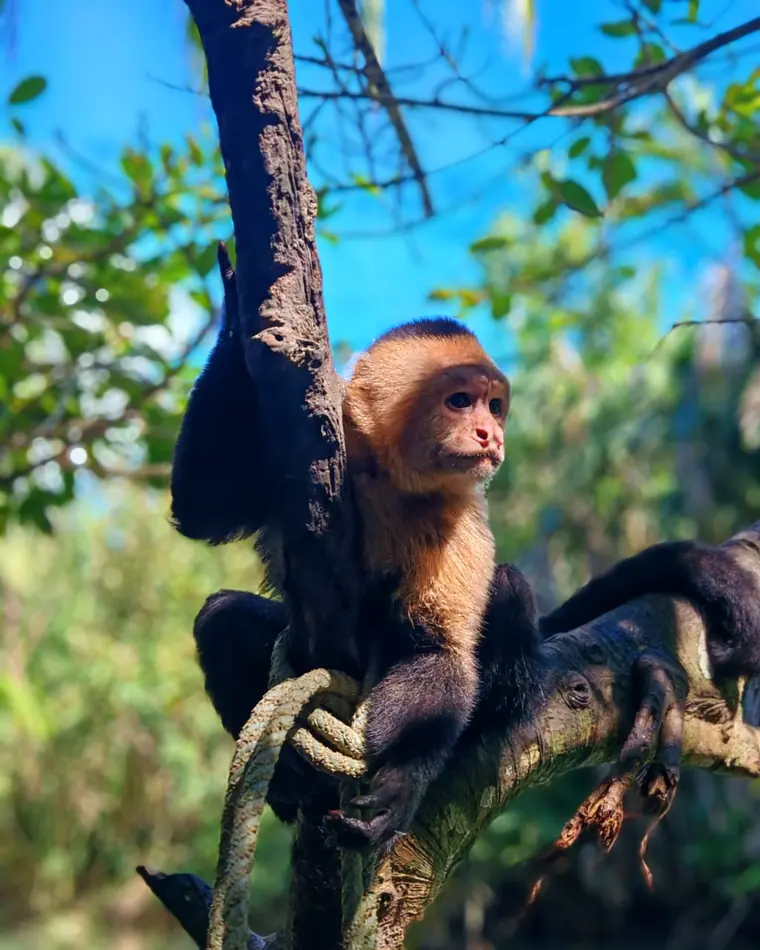
En muchos parques nacionales uno camina horas para ver un movimiento entre las ramas. Manuel Antonio es lo contrario: el bosque es bajo, los senderos son cortos y los animales están acostumbrados a la gente. Perezosos de dos y tres dedos, iguanas, guatusas cruzando el sendero como si fueran del personal, y los dos monos: el carablanca, que es un ladrón profesional, y el tití, pequeño y anaranjado, que en Costa Rica prácticamente solo se ve aquí y en la península de Osa.
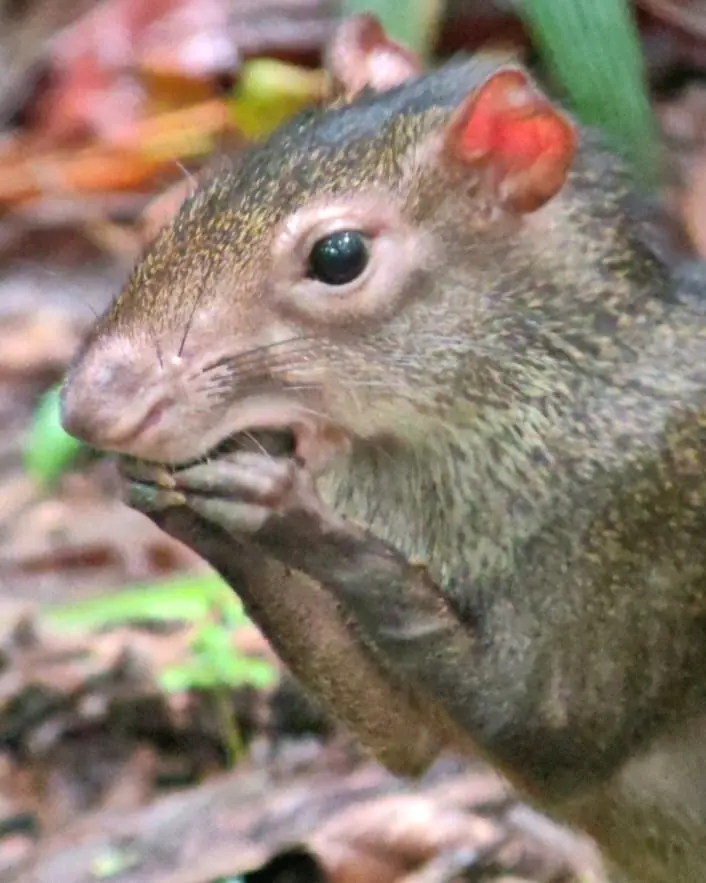
Dos reglas que el parque se toma en serio. No se alimenta a ningún animal — un mono que aprende a asaltar mochilas termina mal, y las multas son reales. Y revise las restricciones de comida al comprar el tiquete: el parque limita qué alimentos entran, justamente para quitarle presión a esa costumbre de los carablancas.
A qué hora ir
A la primera hora, sin debate. Al abrir, el parque está fresco, los animales están activos y los senderos vacíos. Del mediodía en adelante el calor aplasta, los perezosos se hacen bola y la fila de la entrada se junta con los grupos de crucero. La diferencia entre entrar a las 7 y entrar a las 10 es la diferencia entre ver el parque y ver gente.
Lo esencial
Tiquete en línea con anticipación, pasaporte en mano, nunca en martes, y en la puerta a la hora de apertura. Traje de baño debajo de la ropa: Playa Manuel Antonio queda a 30 minutos caminando de la entrada y es de las mejores del país para nadar.
Manuel Antonio without queues or surprises: an honest guide to the most visited park
Manuel Antonio is one of Costa Rica's smallest national parks and its most visited, and that combination has consequences: daily quotas that sell out, a closing day that catches half the world off guard, and beaches with different rules twenty metres apart. None of it is a problem if you arrive knowing.
There is one photograph of Manuel Antonio everyone has seen: a point of forest pushed into the sea, a pale beach on either side, like a tree with its crown towards the Pacific. That is Punta Catedral, and the strip of sand tying it to the mainland is the reason this tiny park receives more visitors than any other in the country.
Tickets are bought beforehand, not at the gate
The change most travellers miss: park tickets are sold online, in advance, through the official SINAC system. There is no ticket window at the entrance. Daily capacity is limited, and in high season — December to April, plus July — morning slots sell out days ahead.
Buy your ticket as soon as you have a date, keep the confirmation on your phone and carry each person's passport, because tickets are issued by name. If you travel with us we remind you when you book the transfer — precisely because we have watched families reach the gate on a January Saturday without one.
Closed on Tuesdays
The park closes every Tuesday, all year round. It sounds like a minor detail until a two-night stay lands exactly on one. If Manuel Antonio is your priority, build the itinerary around that day — and if Tuesday is what you got, the public Espadilla beach never closes.
The beaches: which is which
This is where people get confused, because there are beaches inside the park and beaches outside, metres apart.
Espadilla Norte is the big public beach, fronting the hotels and restaurants. It is free, always open, and serves serious sunsets. It is also an open-ocean beach with strong rip currents: respect the signs and ask the lifeguards where to swim, because the safe spot moves with the tide.
Playa Manuel Antonio, inside the park, is the postcard: a half-moon sheltered by the point, calm water, ideal for children. Ten minutes' walk away are Gemelas and Puerto Escondido, smaller and far emptier.
You genuinely see the animals
In many national parks you walk for hours to catch one movement in the branches. Manuel Antonio is the opposite: the forest is low, the trails are short and the animals are used to people. Two- and three-toed sloths, iguanas, agoutis crossing the path like members of staff, and both monkeys: the white-faced capuchin, a professional thief, and the squirrel monkey — small, orange, and in Costa Rica seen almost only here and on the Osa peninsula.
Two rules the park takes seriously. Never feed any animal — a monkey that learns to raid backpacks ends badly, and the fines are real. And check the food restrictions when you buy your ticket: the park limits what food comes in, precisely to take the pressure off that capuchin habit.
What time to go
First thing, no debate. At opening the park is cool, the animals are active and the trails are empty. From midday on, the heat flattens everything, the sloths curl into balls and the entrance queue merges with the cruise-ship groups. The difference between walking in at 7 and at 10 is the difference between seeing the park and seeing people.
The short version
Ticket online in advance, passport in hand, never on a Tuesday, and be at the gate for opening time. Swimsuit under your clothes: Playa Manuel Antonio is a 30-minute walk from the entrance and one of the country's finest for swimming.
¿Vamos a Manuel Antonio?
Shall we go to Manuel Antonio?
Lo recogemos en su hotel y lo dejamos en la entrada a la hora de apertura, que es cuando los animales se dejan ver. Precio final por vehículo, con las paradas del camino incluidas.
We pick you up at your hotel and drop you at the gate for opening time, when the animals are out. Final price per vehicle, road stops included.