El grano de oro: cómo el café construyó Costa Rica (y el mito que todos repiten)
En 1843 un capitán inglés se llevó 5.505 quintales de café de Puntarenas rumbo a Liverpool. Ese viaje cambió el país más que ninguna guerra. Pero la historia más repetida sobre el café costarricense — la del Teatro Nacional — resulta que es falsa, y los documentos lo dicen claro.
Costa Rica no tuvo oro, ni plata, ni un imperio indígena que saquear. Fue durante trescientos años la colonia más pobre y más olvidada de Centroamérica — tan pobre que hay crónicas del siglo XVII de gobernadores cultivando su propia comida porque no había con qué pagarles.
Todo lo que el país es hoy sale de una planta que llegó de las Antillas alrededor de 1776.
La línea de tiempo que casi nadie conoce
| Año | Qué pasó |
|---|---|
| 1776 | Llegan las primeras semillas de café desde las Antillas |
| 1816 | El testamento del padre Félix Velarde documenta el primer cafetal conocido |
| 1820 | Primera exportación: un quintal sale de Puntarenas a Panamá en el Nuestra Señora |
| 1830 | Llega la primera imprenta, pagada con dinero de café |
| 1831 | El Estado titula tierras baldías a quien las siembre de café |
| 1832 | El comerciante alemán Jorge Stiepel manda café a Chile; de ahí sale a Londres como "chileno de Valparaíso" |
| 1836 | Primera emisión de moneda propia |
| 1840 | Más de 14.000 carretas de bueyes mueven 440.000 quintales al año |
| 1843 | El capitán William Le Lacheur se lleva 5.505 quintales a Inglaterra en el Monarch |
| 1843 | Se funda la primera universidad |
| 1845 | Primer hospital formal |
| 1871 | Arranca el ferrocarril al Atlántico |
Fíjese en el patrón: imprenta, moneda, universidad, hospital, ferrocarril. El café no fue un negocio más. Fue el que pagó la construcción del Estado costarricense. Y todo en el lapso de una vida humana.
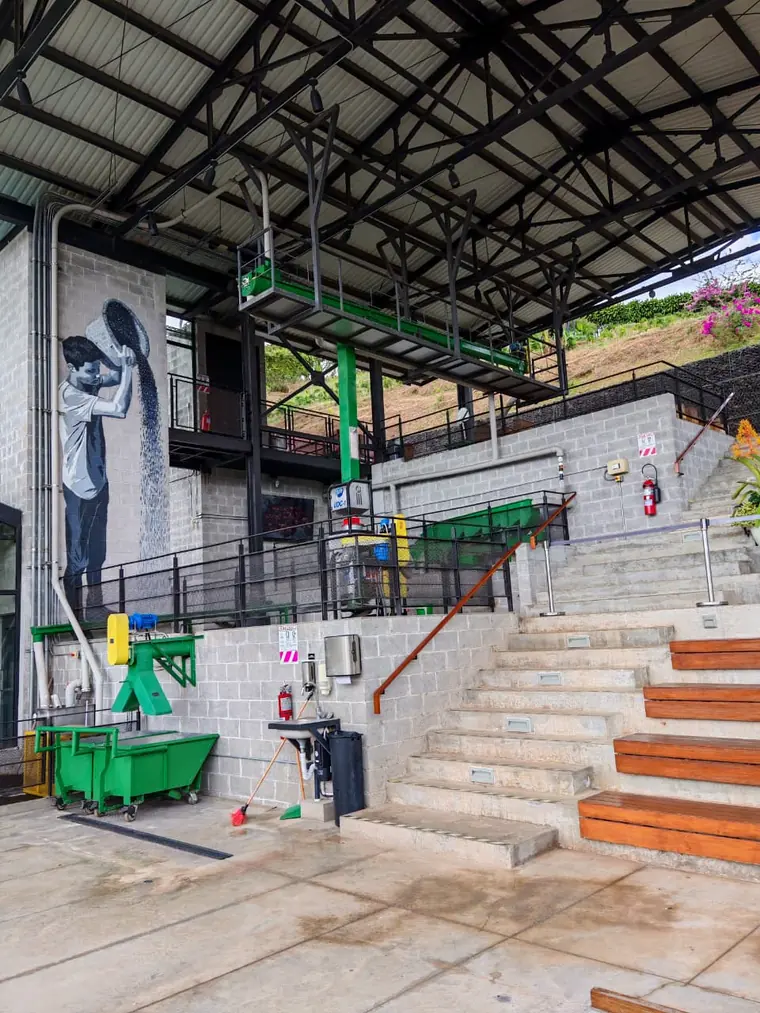
1831: la decisión que lo cambió todo
Este es el año que más importa y el que menos se menciona. En 1831 el Estado decidió entregar en propiedad las tierras baldías a quien las sembrara de café. No las vendió a un puñado de familias: las tituló a quien las trabajara.
La consecuencia fue una estructura de muchos productores pequeños y medianos en el Valle Central, en vez de las grandes plantaciones con mano de obra esclava que definieron a Guatemala, El Salvador o el Caribe azucarero.
Esa diferencia explica buena parte de por qué Costa Rica terminó siendo otra cosa. No fue virtud moral ni excepcionalidad: fue una decisión de política de tierras tomada en 1831 y una geografía que no permitía haciendas gigantes en un valle estrecho entre montañas.
De dónde sale "grano de oro"
El apodo no es poético. Durante buena parte del siglo XIX, el café fue literalmente la fuente del oro del país: la única mercancía que traía divisas de Europa. Cuando bajaba el precio internacional del café, Costa Rica entera se apretaba el cinturón.
El capitán que se arriesgó
William Le Lacheur era un capitán de las Islas del Canal que iba de regreso a Inglaterra con la bodega medio vacía. En 1843 recaló en Puntarenas, vio el café apilado sin comprador directo y propuso algo que hoy suena descabellado: llevárselo sin pagarlo, venderlo en Londres y volver con la plata.
Los productores le entregaron 5.505 quintales a un desconocido, a crédito y sin garantía, para un viaje de meses rodeando el Cabo de Hornos.
Le Lacheur volvió. Y pagó. Con eso quedó abierta la ruta directa a Inglaterra, sin intermediarios chilenos, y el café costarricense dejó de venderse disfrazado con nombre ajeno.
El mito del Teatro Nacional
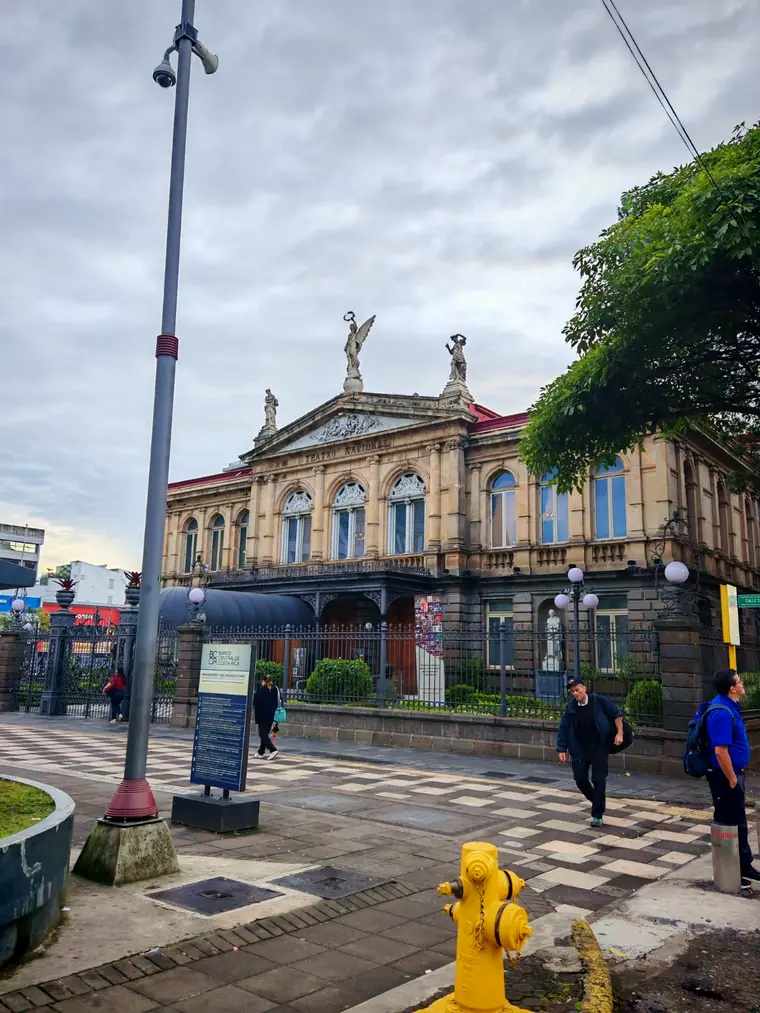
Aquí viene la parte que casi todas las guías repiten mal, y vale la pena decirla con nombre y apellido.
La versión popular dice que los cafetaleros, ofendidos porque la soprano Adelina Patti no quiso cantar en Costa Rica por falta de un teatro digno, se autoimpusieron un impuesto al café y con eso construyeron el Teatro Nacional. Es una historia perfecta. Y es falsa en sus dos mitades.
Lo que dicen los documentos:
- El impuesto al café existió, pero duró poco. Se estableció en 1890 sobre la exportación de café y en 1893 fue sustituido por un impuesto general a las importaciones, que pagaba toda la población al consumir.
- El aporte del sector cafetalero fue menor: unos 120.000 pesos, frente a un costo total de entre 1.100.000 y 1.200.000 pesos. Es decir, alrededor del 10 %.
- Más del 90 % lo pagó la población costarricense a través de ese impuesto general al consumo.
- La historia de Adelina Patti no tiene respaldo. Los historiadores la califican de explicación facilista para un proceso político y cultural mucho más complejo.
- Lo construyeron unos 400 artesanos costarricenses — carpinteros, albañiles, herreros, pintores.
- Se inauguró el 19 de octubre de 1897, no el 21 como se celebró durante décadas, con el Fausto de Gounod.
Que quede claro: el café sí financió al país. Pero el Teatro Nacional, el símbolo que siempre se le atribuye, lo pagó el pueblo entero comprando cosas importadas, y lo levantaron obreros locales. Es una historia menos elegante y bastante más honesta.
Del asiento del conductor
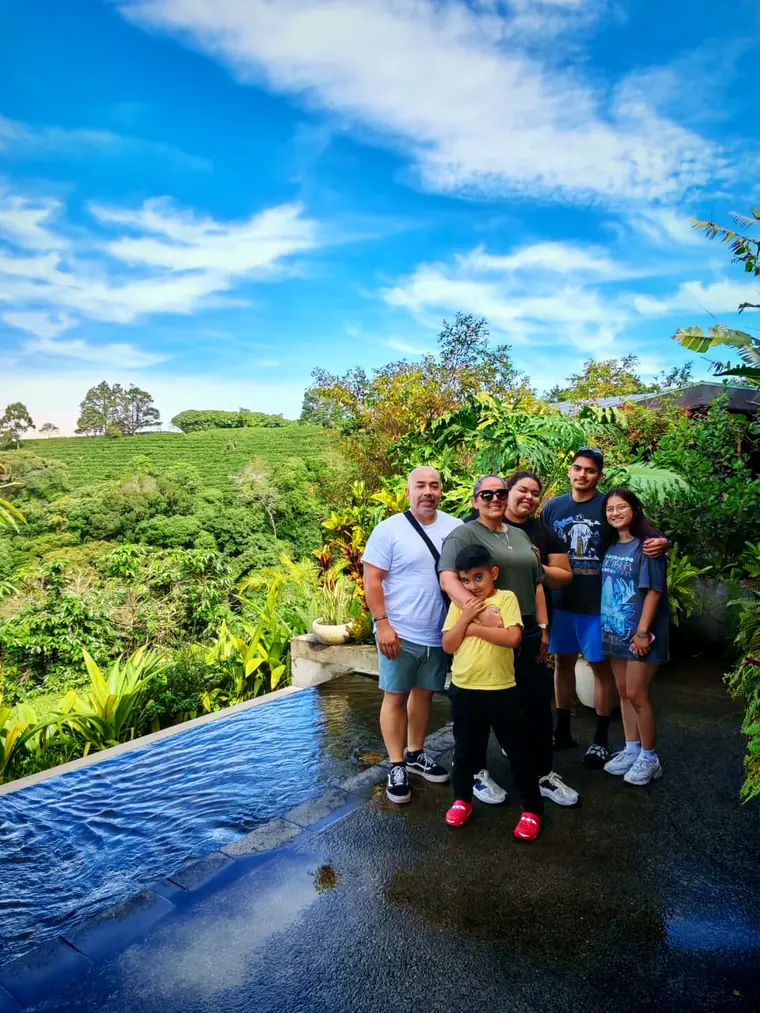
Si va de San José hacia el Pacífico o sube a Monteverde, va a cruzar cafetales sin darse cuenta. Se reconocen fácil: hileras de arbustos bajos y oscuros bajo árboles de sombra más altos, casi siempre en ladera, entre los 800 y los 1.600 metros.
Entre noviembre y febrero es cosecha, y va a ver cuadrillas con canastos amarrados a la cintura. Es la mejor época para parar en una finca: hay actividad de verdad, no una demostración montada para turistas.
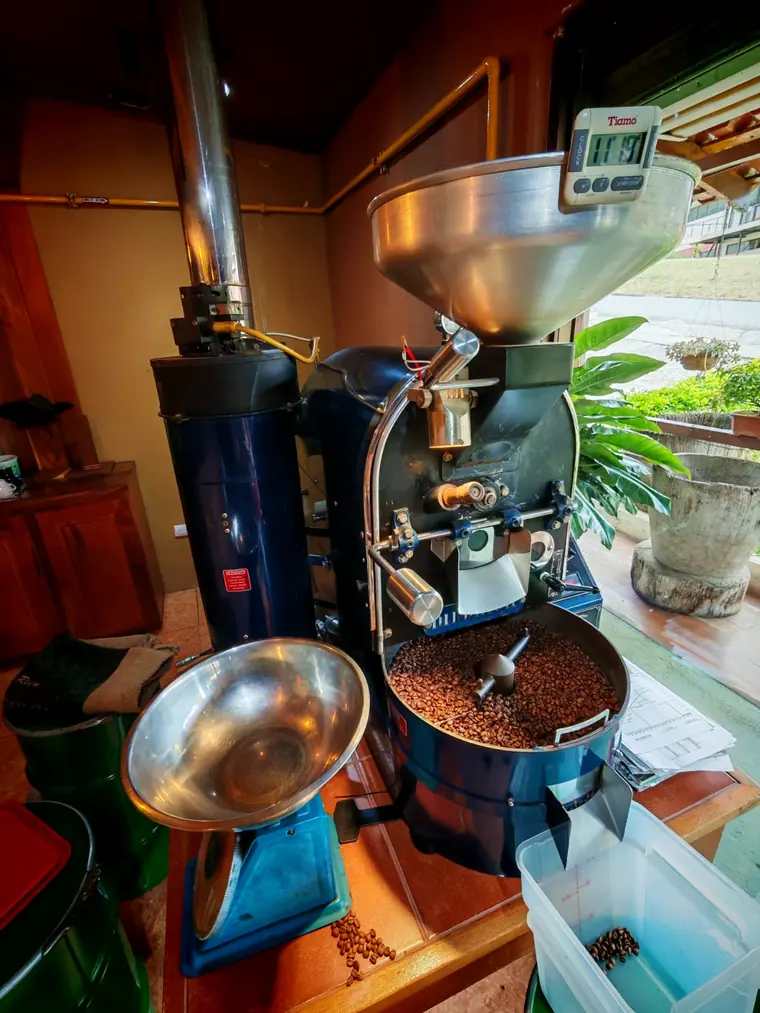
Nosotros paramos donde el café se produce, no en la tienda de recuerdos de la carretera. Un cafecito rápido en el camino va incluido en el traslado estándar. Ahora, recorrer una finca con calma —ver el beneficio, el secado, catar— pide entre una y dos horas: para eso está el Tropical Experts VIP, y se agrega al cotizar.
Lo que queda de todo esto
Costa Rica ya no vive del café — hoy pesan más los servicios, los dispositivos médicos y el turismo. Pero el país que usted va a recorrer se armó con ese dinero: las carreteras del Valle Central siguen los caminos que abrieron las carretas, el ferrocarril al Atlántico se hizo para sacar sacos, y los pueblos cafetaleros son los que tienen las iglesias grandes.
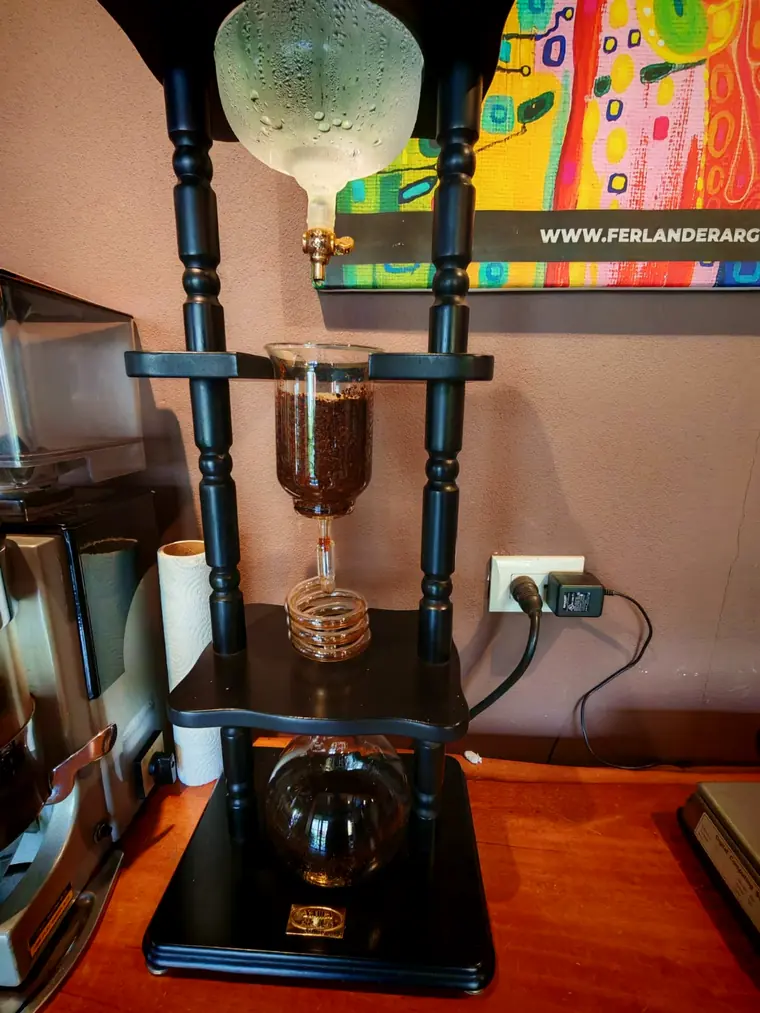
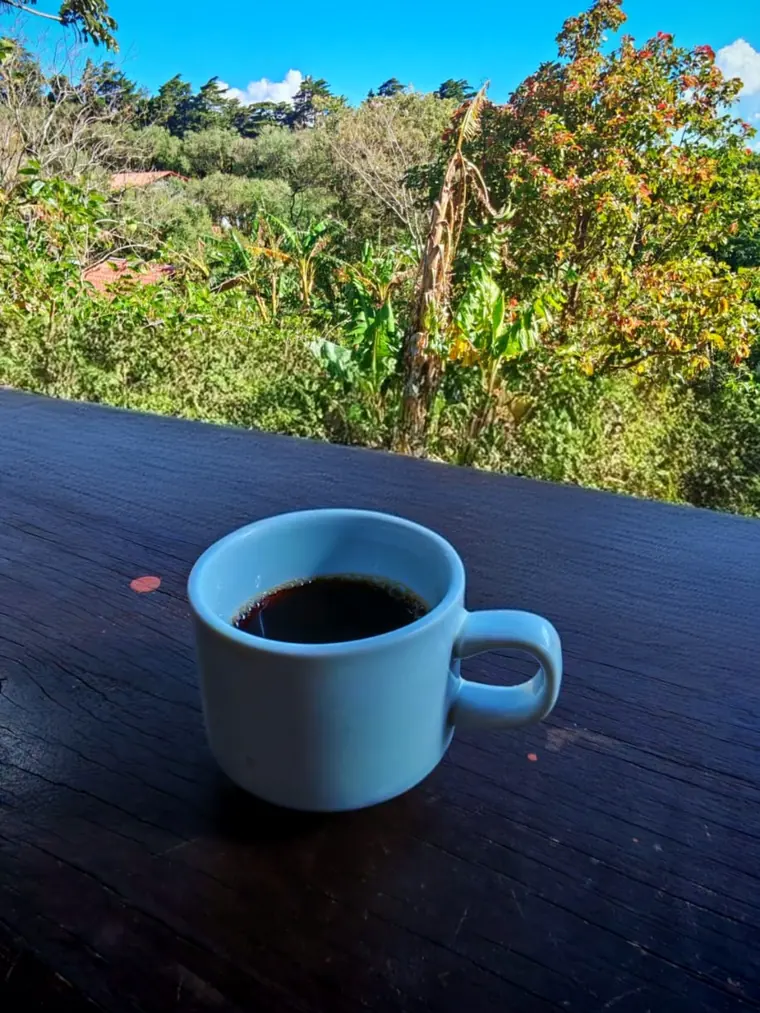
Cuando pida un café en una soda y se lo sirvan en chorreador — esa bolsa de tela colgada de un soporte de madera — está tomando el método que se usó aquí antes de que existiera cualquier máquina. No es nostalgia de turista: es como se cuela en la mitad de las casas del país.
Lo esencial
El café llegó alrededor de 1776 y para 1843 ya salía directo a Inglaterra. Pagó la imprenta, la moneda, la universidad, el hospital y el ferrocarril. La decisión de 1831 de titular tierra a quien la sembrara creó una estructura de pequeños productores que marcó al país. Y no, el café no pagó el Teatro Nacional: eso lo pagó la población entera con un impuesto a las importaciones.
Fuentes consultadas
The golden grain: how coffee built Costa Rica (and the myth everyone repeats)
In 1843 an English captain carried 5,505 hundredweight of coffee out of Puntarenas bound for Liverpool. That voyage changed the country more than any war. But the most repeated story about Costa Rican coffee — the one about the National Theatre — turns out to be false, and the documents say so plainly.
Costa Rica had no gold, no silver, and no indigenous empire to plunder. For three hundred years it was the poorest and most forgotten colony in Central America — so poor that seventeenth-century chronicles describe governors growing their own food because there was nothing to pay them with.
Everything the country is today comes from a plant that arrived from the Antilles around 1776.
The timeline almost nobody knows
| Year | What happened |
|---|---|
| 1776 | The first coffee seeds arrive from the Antilles |
| 1816 | Father Félix Velarde's will documents the first known coffee plot |
| 1820 | First export: one hundredweight leaves Puntarenas for Panama aboard the Nuestra Señora |
| 1830 | The first printing press arrives, paid for with coffee money |
| 1831 | The State grants title to unclaimed land to whoever plants it with coffee |
| 1832 | German merchant Jorge Stiepel ships coffee to Chile; from there it reaches London as "Chilean from Valparaíso" |
| 1836 | The country issues its own currency for the first time |
| 1840 | More than 14,000 ox carts move 440,000 hundredweight a year |
| 1843 | Captain William Le Lacheur carries 5,505 hundredweight to England aboard the Monarch |
| 1843 | The first university is founded |
| 1845 | The first formal hospital opens |
| 1871 | Construction begins on the Atlantic railway |
Look at the pattern: printing press, currency, university, hospital, railway. Coffee was not just another business. It was what paid for the construction of the Costa Rican state. All within a single human lifetime.
1831: the decision that changed everything
This is the year that matters most and gets mentioned least. In 1831 the State decided to grant ownership of unclaimed land to anyone who planted it with coffee. It did not sell it to a handful of families: it titled it to whoever worked it.
The consequence was a structure of many small and medium growers across the Central Valley, instead of the large plantations with enslaved labour that defined Guatemala, El Salvador or the sugar Caribbean.
That difference explains a good part of why Costa Rica turned out otherwise. It was not moral virtue or exceptionalism: it was a land-policy decision taken in 1831, and a geography that did not allow vast estates in a narrow valley between mountains.
Where "golden grain" comes from
The nickname is not poetic. For much of the nineteenth century coffee was literally the country's source of gold: the only commodity bringing in European currency. When the international coffee price fell, all of Costa Rica tightened its belt.
The captain who took the risk
William Le Lacheur was a Channel Islands captain heading back to England with a half-empty hold. In 1843 he put in at Puntarenas, saw coffee stacked up with no direct buyer, and proposed something that sounds reckless today: take it without paying, sell it in London, and come back with the money.
The growers handed 5,505 hundredweight to a stranger, on credit and without guarantee, for a voyage of months around Cape Horn.
Le Lacheur came back. And he paid. That opened the direct route to England, without Chilean middlemen, and Costa Rican coffee stopped being sold under somebody else's name.
The National Theatre myth
Here comes the part almost every guide gets wrong, and it is worth stating precisely.
The popular version says the coffee barons, offended that soprano Adelina Patti would not sing in Costa Rica for want of a decent theatre, taxed themselves on coffee and built the National Theatre with it. It is a perfect story. And it is false in both halves.
What the documents say:
- The coffee tax existed, but briefly. It was set in 1890 on coffee exports and in 1893 it was replaced by a general tax on imports, paid by the whole population through consumption.
- The coffee sector's contribution was minor: around 120,000 pesos, against a total cost of between 1,100,000 and 1,200,000 pesos. Roughly 10%.
- More than 90% was paid by the Costa Rican population through that general consumption tax.
- The Adelina Patti story has no backing. Historians call it a facile explanation for a far more complex political and cultural process.
- It was built by some 400 Costa Rican craftsmen — carpenters, masons, ironworkers, painters.
- It opened on 19 October 1897, not the 21st as was celebrated for decades, with Gounod's Faust.
To be clear: coffee did finance the country. But the National Theatre, the symbol always attributed to it, was paid for by the whole population buying imported goods, and raised by local workers. It is a less elegant story and a considerably more honest one.
From the driver's seat
If you are going from San José towards the Pacific or climbing to Monteverde, you will cross coffee farms without noticing. They are easy to spot: rows of low dark shrubs under taller shade trees, almost always on a slope, between 800 and 1,600 metres.
November to February is harvest, and you will see picking crews with baskets tied at the waist. That is the best time to stop at a farm: there is real work going on, not a demonstration staged for visitors.
We stop where the coffee is actually produced, not at the roadside souvenir shop. A quick coffee on the way is included in the standard transfer. But walking a farm properly — seeing the mill, the drying patios, tasting — needs one to two hours: that is what Tropical Experts VIP is for, and you add it when you price the trip.
What is left of all this
Costa Rica no longer lives on coffee — services, medical devices and tourism weigh more today. But the country you are about to travel through was built with that money: the Central Valley roads follow the tracks the ox carts opened, the Atlantic railway was built to move sacks, and the coffee towns are the ones with the large churches.
When you order a coffee in a soda and it arrives from a chorreador — that cloth bag hanging from a wooden stand — you are drinking by the method used here before any machine existed. It is not tourist nostalgia: it is how half the households in the country still brew.
The short version
Coffee arrived around 1776 and by 1843 was shipping directly to England. It paid for the printing press, the currency, the university, the hospital and the railway. The 1831 decision to grant land title to whoever planted it created a structure of small growers that shaped the country. And no, coffee did not pay for the National Theatre: the whole population did, through a tax on imports.
Sources
Va a pasar por los cafetales
You will drive through the coffee country
La ruta al Pacífico y la subida a Monteverde cruzan el corazón cafetalero. Agregue el servicio Tropical Experts VIP al cotizar y el conductor arma la parada.
The route to the Pacific and the climb to Monteverde cross the heart of it. Add the Tropical Experts VIP service when you price the trip and the driver arranges the stop.