El día que Costa Rica derribó su propio cuartel: la abolición del ejército
Costa Rica es uno de los poquísimos países del mundo sin ejército, y el único que llegó a eso por decisión del bando que acababa de ganar una guerra. Esta es la historia completa, con sus fechas, su mazo y su detalle más hermoso: a quién le entregaron las llaves del cuartel.
A los pasajeros que nos preguntan por qué en la carretera nunca se ve un convoy militar les contamos esta historia, y siempre pasa lo mismo: silencio, y después la pregunta de si es en serio. Es en serio. Costa Rica no tiene ejército desde 1948, y la manera en que llegó a eso no se parece a la de ningún otro país.
Primero, la guerra
La paradoja fundadora: el país sin ejército nació de una guerra. En febrero de 1948 hubo elecciones presidenciales, y el Congreso de la época anuló el resultado cuando ganó el candidato opositor, Otilio Ulate. Seis semanas después, un cafetalero e ingeniero llamado José Figueres Ferrer se alzó en armas para hacer valer esa elección.
La guerra civil de 1948 duró unas seis semanas —de marzo a abril— y dejó alrededor de dos mil muertos. Sigue siendo el episodio más sangriento de la historia moderna del país. Figueres ganó, asumió el poder al frente de una junta provisional, y ahí viene el giro que nadie esperaba.
El vencedor disuelve su propio instrumento
Todo manual de historia dice lo mismo: el que gana una guerra se queda con el ejército, no lo elimina. Figueres hizo lo contrario. El 1 de diciembre de 1948, en una ceremonia en el cuartel Bellavista —el principal del país, en una loma sobre San José—, anunció la disolución de las fuerzas armadas.
Y lo hizo con teatro del bueno: tomó un mazo y golpeó él mismo una de las almenas del muro del cuartel, frente a las cámaras. El gesto decía lo que las palabras tardaban más en decir: esto no se cierra por ahora, se derriba para siempre.
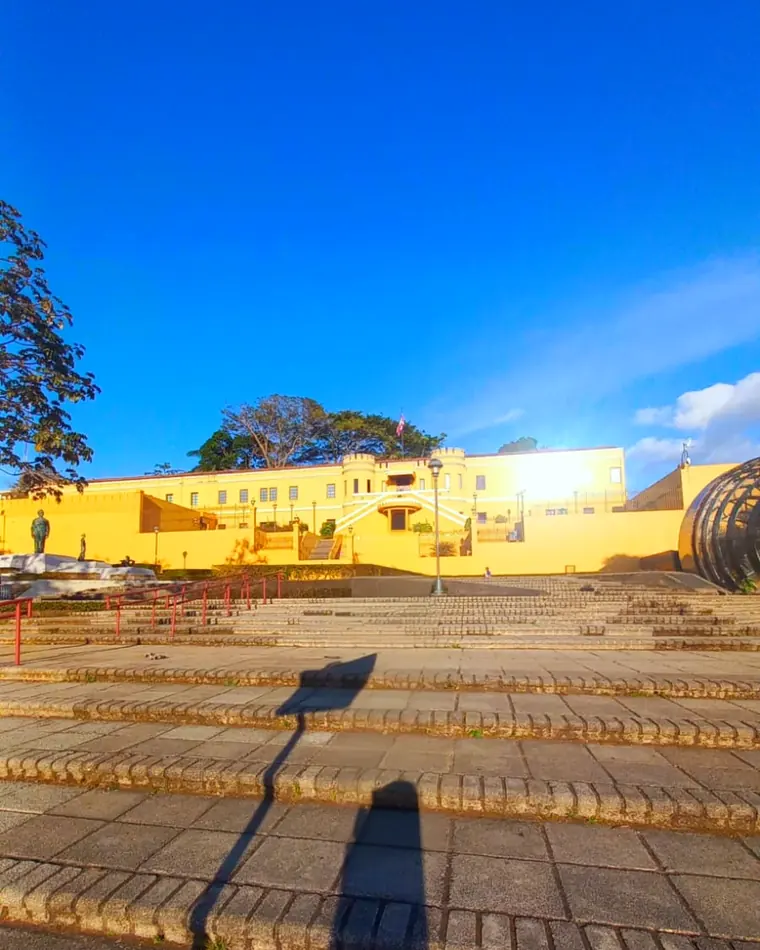
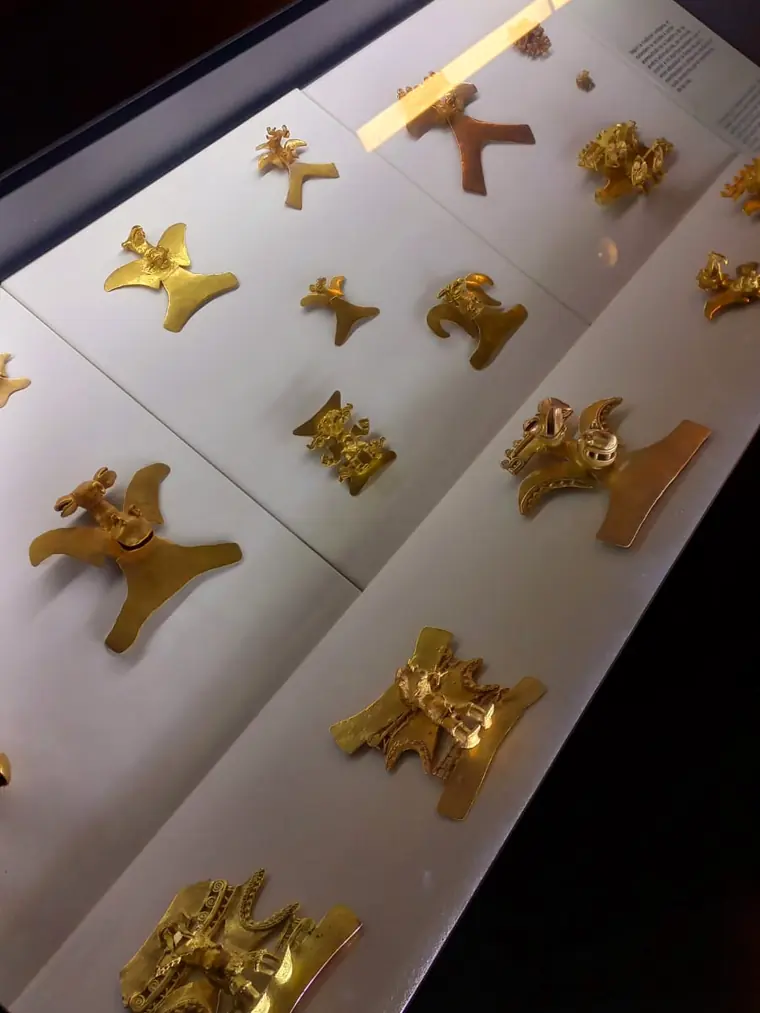
El detalle que más nos gusta contar en la buseta: las llaves del cuartel no se archivaron ni se entregaron a la policía. Se entregaron al ministro de Educación, y el edificio pasó a ser la sede del Museo Nacional — que es exactamente lo que sigue siendo hoy. Donde había fusiles hay mariposas, esferas precolombinas y escolares en fila.
De gesto a ley
Un golpe de mazo se deshace con otro decreto, así que el paso decisivo vino después: la Constitución de 1949 proscribió el ejército como institución permanente en su artículo 12. Desde entonces la abolición no es una política de gobierno: es una regla del juego, y ningún presidente puede revertirla sin reformar la Constitución.
La plata que se ahorraba en cuarteles se fue a otra parte, y esa otra parte es la que usted ve por la ventana: escuelas hasta en el último caserío de la montaña, el seguro social, y con los años uno de los sistemas de parques nacionales más ambiciosos del planeta. La frase que se repite aquí desde niños es que los cuarteles se cambiaron por aulas — y por una vez, el eslogan coincide con el presupuesto.
¿Y funcionó?
Setenta y tantos años después, los resultados están a la vista: Costa Rica atravesó la segunda mitad del siglo XX —la época de las dictaduras militares en toda América Latina— sin un solo golpe de Estado, con elecciones ininterrumpidas desde 1953. En 1987, mientras Centroamérica entera estaba en guerra, el presidente Óscar Arias recibió el Premio Nobel de la Paz por el plan que ayudó a terminarlas. Es difícil imaginar ese Nobel en un país con generales.
Hoy el 1 de diciembre es feriado nacional: el Día de la Abolición del Ejército. Un país que celebra con día libre el aniversario de haberse quedado sin soldados — eso, créanos, no se ve en ningún otro lado.
Del asiento del conductor
El Museo Nacional se reconoce apenas se llega al centro de San José: es el edificio amarillo almenado tipo fortaleza frente a la Plaza de la Democracia. Todavía tiene los impactos de bala de la guerra del 48 en las torres — no los taparon a propósito.
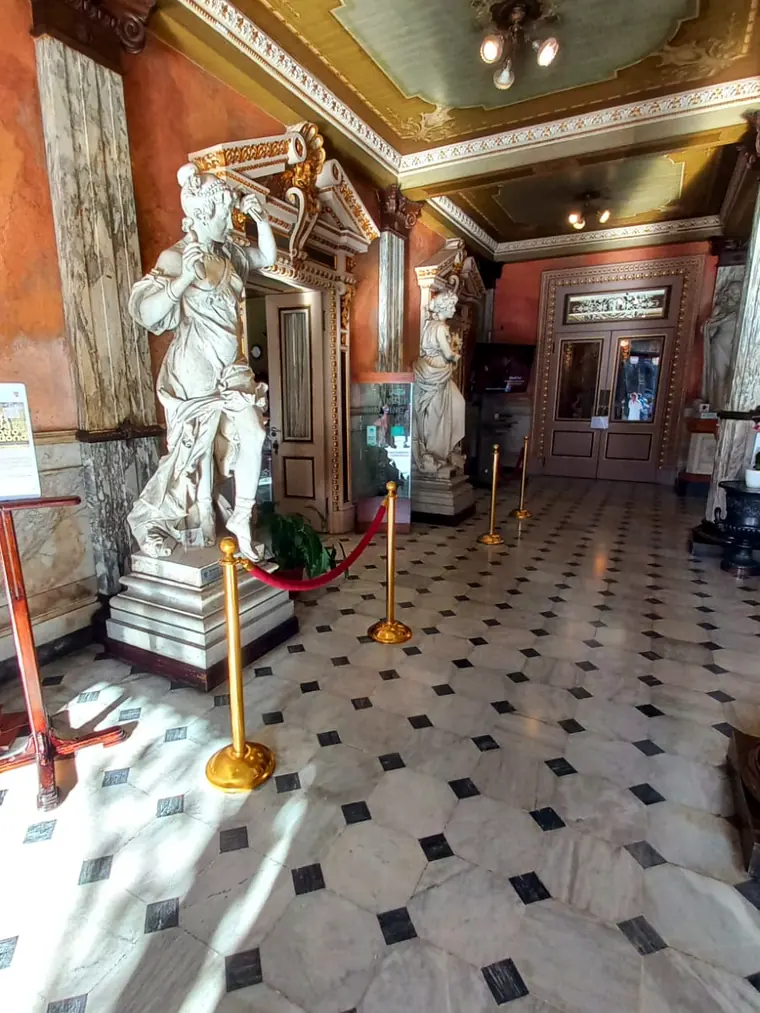
Si su vuelo sale en la tarde, la mañana del último día alcanza perfecto: museo, un café en el Teatro Nacional a cinco cuadras, y de ahí al aeropuerto. Es de nuestros cierres de viaje favoritos, porque el país se entiende distinto después de ver ese muro.
Lo esencial
1948: guerra civil de seis semanas. El vencedor, José Figueres, disuelve el ejército el 1 de diciembre y golpea el muro del cuartel con un mazo. La Constitución de 1949 lo vuelve permanente. Las llaves del cuartel terminan en manos del ministro de Educación, y el cuartel, convertido en el Museo Nacional que se visita hoy.
Fuentes consultadas
The day Costa Rica knocked down its own barracks: how the army was abolished
Costa Rica is one of the very few countries on Earth without an army — and the only one that got there by decision of the side that had just won a war. This is the full story, with its dates, its mallet, and its most beautiful detail: who was handed the keys to the barracks.
When passengers ask why you never see a military convoy on the highway, we tell them this story, and the same thing always happens: silence, then the question of whether we are serious. We are. Costa Rica has had no army since 1948, and the way it got there resembles no other country's path.
First, the war
The founding paradox: the country without an army was born of a war. In February 1948 there was a presidential election, and the Congress of the day annulled the result when the opposition candidate, Otilio Ulate, won. Six weeks later, a coffee farmer and engineer named José Figueres Ferrer took up arms to enforce that election.
The civil war of 1948 lasted about six weeks — March to April — and left around two thousand dead. It remains the bloodiest episode in the country's modern history. Figueres won, took power at the head of a provisional junta, and then came the turn nobody expected.
The victor dissolves his own instrument
Every history manual says the same thing: the winner of a war keeps the army, he does not eliminate it. Figueres did the opposite. On 1 December 1948, at a ceremony at the Bellavista barracks — the country's main garrison, on a hill above San José — he announced the dissolution of the armed forces.
And he did it with proper theatre: he took a mallet and personally struck one of the battlements of the barracks wall, in front of the cameras. The gesture said what words would take longer to say: this is not closing for now — it is being torn down for good.
The detail we most enjoy telling in the van: the keys to the barracks were not filed away or handed to the police. They were given to the Minister of Education, and the building became the home of the National Museum — which is exactly what it still is today. Where there were rifles there are butterflies, pre-Columbian stone spheres and schoolchildren in single file.
From gesture to law
A mallet blow can be undone by the next decree, so the decisive step came afterwards: the Constitution of 1949 proscribed the army as a permanent institution in its Article 12. Since then, abolition is not a government policy: it is a rule of the game, and no president can reverse it without amending the Constitution.
The money saved on barracks went elsewhere, and that elsewhere is what you see out the window: schools in the last hamlet on the mountain, the social security system, and over the years one of the most ambitious national park systems on the planet. The phrase every child here grows up hearing is that the barracks were traded for classrooms — and for once, the slogan matches the budget.
Did it work?
Seventy-odd years later, the results are in plain sight: Costa Rica crossed the second half of the twentieth century — the era of military dictatorships across Latin America — without a single coup, with uninterrupted elections since 1953. In 1987, while the rest of Central America was at war, President Óscar Arias received the Nobel Peace Prize for the plan that helped end those wars. It is hard to imagine that Nobel in a country with generals.
Today, 1 December is a national holiday: Army Abolition Day. A country that takes a day off to celebrate the anniversary of running out of soldiers — that, believe us, you will not see anywhere else.
From the driver's seat
You recognise the National Museum the moment you reach downtown San José: it is the yellow, crenellated fortress-like building facing the Plaza de la Democracia. The towers still carry bullet marks from the war of '48 — deliberately left unrepaired.
If your flight leaves in the afternoon, the last morning fits perfectly: the museum, a coffee at the National Theatre five blocks away, and on to the airport. It is one of our favourite ways to close a trip, because the country reads differently once you have seen that wall.
The short version
1948: a six-week civil war. The victor, José Figueres, dissolves the army on 1 December and strikes the barracks wall with a mallet. The 1949 Constitution makes it permanent. The keys end up with the Minister of Education, and the barracks becomes the National Museum you can visit today.
Sources
¿Quiere ver dónde pasó?
Want to see where it happened?
El antiguo cuartel Bellavista es hoy el Museo Nacional, en pleno centro de San José. Si su itinerario pasa por la capital, se visita en una mañana — y nosotros lo llevamos.
The old Bellavista barracks is now the National Museum, in the heart of San José. If your itinerary passes through the capital, it fits in a morning — and we will take you.